

Planning a trip to Greece and thinking about something a little different? The Peloponnese region in southern Greece might be exactly what you’re looking for — a destination that’s rich in ancient history, genuinely beautiful, and far less crowded than the Greek islands most people default to.
The Peloponnese is where ancient Greece actually happened. The legendary city-states of Mycenae, Sparta, and Corinth all rose and fell here. The first Olympic Games were held on this peninsula. Byzantine fortress towns still cling to cliffs above the sea. And running alongside all of that history is a landscape of rugged mountains, pristine beaches, charming villages, and lush olive groves that makes the whole region genuinely beautiful to drive through.
This guide covers five of the best places to visit in the Peloponnese — Kalamata, Olympia, Nafplio, Monemvasia, and Corinth — with everything you need to plan the trip: when to go, how to get there, where to stay, what to do, and what to eat. Whether you’re here for the archaeology, the food, the beaches, or simply a slower and more authentic Greek experience, the Peloponnese delivers.

Table of Contents
📌 Quick Resources for the Peloponnese
- ✈️ Flights: Skyscanner — Scoot from Singapore to Athens; then domestic to Chania.
- 🚗 Car hire: DiscoverCars — Essential for exploring between destinations at your own pace.
- 🎟️ Tours & day trips: GetYourGuide — Book guided tours and skip-the-line access across the region.
- 📱 eSIM: Airalo — stay connected for navigation and day-trip bookings.
- 🩺 Travel insurance: SafetyWing — Sorted before you fly.
🌤️ Best Time to Visit the Peloponnese
Spring (April–May)
The best overall window for visiting the Peloponnese. The countryside is green and in bloom, temperatures hover around 20–25°C, crowds are thin, and the archaeological sites are genuinely pleasant to explore without summer heat. May is particularly good — warm enough for the beach, cool enough for long walks around ruins.
Early Summer (June)
Still excellent — temperatures rise to 25–30°C, which is warm and comfortable, and the main tourist rush hasn’t fully arrived. June is the sweet spot for anyone who wants summer weather without peak-season crowds.
Peak Summer (July–August)
Hot — regularly above 35°C — and the busiest period. Archaeological sites like Olympia can be exhausting in the midday heat. Book accommodation and tours well ahead if you’re travelling in peak summer, and plan outdoor sightseeing for early mornings.
Autumn (September–October)
A strong second choice after spring. The sea remains warm, crowds ease significantly once European school terms restart, and the light in October is exceptional for photography.
Winter (November–March)
Quiet and mild by northern European standards. Some smaller venues have reduced hours, but the archaeological sites remain open, hotels are cheaper, and you’ll have most places to yourself. Not ideal if beaches are the priority, but perfect for history-focused visits.

✈️ How to Get to the Peloponnese
Flying In
From Singapore, Scoot flies direct to Athens (approximately 11 hours). From Athens, you have two onward options for the Peloponnese: fly directly into Kalamata airport (with Swiss Airlines via Zurich, or Lufthansa via Munich) or drive from Athens International Airport — around 3 hours to Kalamata.
Getting Around
Hiring a car is by far the best option for exploring the Peloponnese. The five destinations in this guide are spread across the region, and having a car means you move on your own schedule, stop wherever you want, and make the most of the countryside in between.
Private transfer from Athens Airport to Kalamata is the easiest option if you’d rather not drive on arrival.
Bus from Athens: the KTEL bus from Athens terminal to Kalamata takes approximately 3.5–4 hours and is the most affordable option.
💡 Tip: Many historic city centres in the Peloponnese restrict parking to protect the old towns. Research parking at each stop before you arrive — most tourism sites list the correct zones.
🇬🇷 Practical Information
Visa
Check whether you need a visa using iVisa — a quick way to confirm what your passport requires for Greece.
Currency
Greece uses the Euro. At the time of writing, 1 Euro = approximately 1.65 Singapore dollars — check current rates before you travel.
Language
Greek is the official language. English is widely spoken in tourist areas and hotels throughout the Peloponnese. A few phrases of Greek — “kalispéra” (good evening) and “efharistó” (thank you) — are always appreciated.
Tipping
Tipping isn’t as expected in Greece as in some countries, but rounding up or leaving 5–10% for good service in restaurants and cafés is appreciated and considered polite.

❤️ 5 Best Places to Visit in the Peloponnese
1. Kalamata
Kalamata is the natural base for a Peloponnese road trip — a beautiful coastal city in the southwestern corner of Greece with enough of its own character to justify staying a few days, while also being well placed for day trips further into the region.
The city is most famous internationally for its olives — Kalamata olives are protected by a PDO (Protected Designation of Origin) status, and eating them here, at the source, is genuinely different. But there’s more than food: the Kalamata Castle sits high above the city with sweeping views across the bay, the beaches along the seafront are clean and uncrowded compared to the islands, and the waterfront strip is a genuinely pleasant place to spend an evening.
Kalamata works equally well for food enthusiasts, history buffs, and travellers who simply want to relax in a Greek city that feels lived-in rather than purely tourist-facing.
Tour recommendation: Private highlights walking tour of Kalamata with snacks
💡 Tip: Kalamata’s waterfront fills up in the evenings — arrive early at a restaurant if you want a table with a sea view without a long wait.
👩 Solo travel note: Kalamata is easy and comfortable for solo travellers — a walkable city with a welcoming local atmosphere and plenty of cafés and tavernas where eating alone doesn’t feel awkward.
Where to Stay in Kalamata
- Filoxenia Resort — set in lush gardens overlooking the Mediterranean, with a large pool, poolside bar, fitness centre, and multiple dining options. Best for: families and couples wanting a full resort experience.

2. Olympia
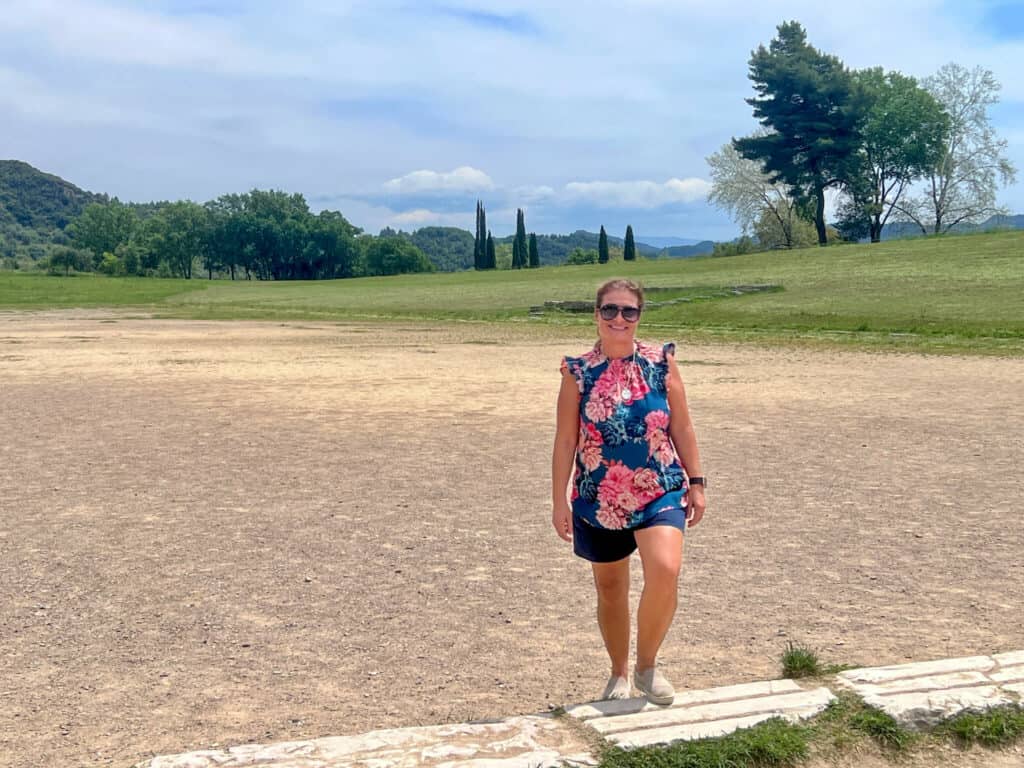
Ancient Olympia is one of the most significant archaeological sites in the entire ancient world — the birthplace of the Olympic Games, which were held here for over 1,000 years from 776 BC. Walking through the ruins, past the Temple of Zeus, the ancient stadium, and the Philippeion, is one of those experiences that manages to feel genuinely awe-inspiring even if you’ve visited a lot of ancient sites.
The Archaeological Museum of Olympia, just beside the site, houses one of the finest collections of ancient sculpture in Greece — including the Nike of Paionios and the Hermes of Praxiteles. The surrounding countryside is lush and green, quite different from the drier landscapes elsewhere in the Peloponnese, and the village of Olympia itself is small and easy to walk.
Tour recommendation: Guided tour of Ancient Olympia and the Archaeological Museum
💡 Tip: Visit the archaeological site early in the morning — it’s exposed and gets genuinely hot by midday in summer. The museum makes a good afternoon stop once the day has cooled slightly.
Where to Stay in Olympia
- Hotel Europa Olympia — a short distance from the UNESCO site, with rooms ranging from standards to suites, an outdoor swimming pool, and genuinely helpful staff. Consistently highly rated for its location and service.

3. Nafplio
Nafplio is one of those towns that immediately makes you wonder why you hadn’t heard more about it. The first capital of modern Greece after independence, it’s a compact, beautifully preserved port town with neoclassical mansions, Venetian fortifications, and a waterfront that’s genuinely one of the most picturesque in the entire country.
The Palamidi Fortress — 216 steps above the town, or a short drive to the upper entrance — gives views across the Gulf of Argolis that are worth every step. The Bourtzi, a small island fortress sitting in the middle of the harbour, is another iconic sight. The town’s pedestrianised old quarter fills up on weekends with Greek visitors rather than international tourists, which gives Nafplio an authentic and lively atmosphere that many Peloponnese stops lack.
Tour recommendation: Nafplio hop-on hop-off bus tour — a good way to orient yourself across the town and its outskirts on arrival.
👩 Solo travel note: Nafplio is one of the easiest towns in the Peloponnese for solo travel — compact, walkable, and with a café culture that makes spending time alone feel natural rather than conspicuous.
Where to Stay in Nafplio
- Alexandros Boutique Hotel — 100 metres from Nea Kios beach, with breathtaking views, impeccable service, and family rooms available. Best for: couples wanting a boutique experience and families wanting beach proximity.

4. Monemvasia
Monemvasia is the most unexpected stop on this route — a medieval fortress town built entirely on a rock rising from the sea, connected to the mainland by a single causeway (the name translates as ‘single entrance’). It’s one of the best-preserved Byzantine and Venetian towns in Greece, and almost entirely unknown to international tourism compared to the islands.
The lower town is a maze of cobblestone lanes, archways, and flowering courtyards, with churches and mansions dating back to the Byzantine period tucked around every corner. The upper town, reached by a steep path, is largely ruined but gives extraordinary views across the Laconian Gulf. There are no cars in the old town — everything happens on foot, which gives Monemvasia a timeless, unhurried quality that’s hard to find anywhere in Greece today.
Tour recommendation: Private tour of Monemvasia from Athens
💡 Tip: Stay at least one night in Monemvasia — the town transforms after day-trippers leave in the afternoon, and the old town at dusk and early morning is a completely different experience.
Where to Stay in Monemvasia
- Manifesto Suites — a sustainable property about 1.9km from Ambelakia Beach, with an infinity pool, mountain views, and king suites with a hot tub, pool view, and balcony. Quiet location, friendly staff, genuinely memorable.

5. Corinth
Corinth sits at the narrow isthmus connecting mainland Greece with the Peloponnese — historically one of the most strategically important positions in the ancient Mediterranean world, controlling trade between the Aegean and the Ionian seas. At its peak, ancient Corinth was one of the wealthiest cities in Greece, and the ruins that remain — the Temple of Apollo, the ancient agora, the onsite museum — give a strong sense of that former scale and power.
Modern Corinth is a working Greek city rather than a tourist town, which gives it an authentic energy. The Corinth Canal, cut through the isthmus in 1893, is genuinely dramatic — a narrow channel dropping 80 metres, with ships passing through what looks like an impossibly tight slot. For the adventurous, bungee jumping from the bridge over the canal is run by a reputable operator and is exactly as exhilarating as it sounds.
Tour recommendation: Ancient Corinth half-day tour from Athens — works well as either a day trip from Athens or an arrival-day visit on the way into the Peloponnese.
For bungee jumping: Zulu Bungee at the Corinth Canal — book ahead, especially in peak season.
Where to Stay in Corinth
- Octavia Comfort Bungalows — spectacular views of the ancient city, beautifully decorated interiors with Juliette balconies, daily yoga classes, bike rentals, and local tours on offer. Family-run and consistently highly rated.

🍴 What to Eat in the Peloponnese
- Kalamata olives — eat them at source; the difference from imported versions is immediate and significant.
- Lamb and goat — slow-roasted or grilled, the quality of the meat here reflects the region’s pastoral landscape.
- Spanakopita — spinach and feta in filo pastry, a Greek staple that’s at its best in the small family-run bakeries throughout the region.
- Tzatziki — the real thing, made with thick Greek yoghurt and fresh cucumber, nothing like the supermarket version.
- Moussaka — layers of aubergine, minced meat, and béchamel, a proper slow-cooked taverna version is deeply comforting.
- Fresh seafood — grilled catch of the day in any coastal town, particularly good in Nafplio and Kalamata.
- Honey — the Peloponnese produces outstanding thyme honey; it makes one of the best and most practical souvenirs.
- Local wine — the Peloponnese is one of Greece’s most important wine regions, particularly for Agiorgitiko (the red grape variety from Nemea).
💡 My Top Tips for Visiting the Peloponnese
- Hire a car. The Peloponnese is not well served by public transport between towns, and having your own vehicle is the difference between a good trip and a genuinely great one.
- Visit archaeological sites first thing in the morning — they’re exposed and can get very hot by midday in summer. Ancient Olympia especially benefits from an early start.
- Allow at least one night in Monemvasia. The day-trippers leave by late afternoon and the old town becomes a completely different place.
- Book the Corinth Canal bungee jump ahead if that’s on your list — slots fill up quickly in peak season.
- Use Kalamata as your base if you’re short on time. It has good accommodation and is within 1–3 hours of Olympia, Nafplio, Monemvasia, and Corinth.
- Research parking before entering each town’s historic centre — restrictions vary and some old towns don’t allow cars at all.
- Try the local wine. The Peloponnese’s Agiorgitiko red from the Nemea region is excellent and worth ordering at any taverna.
❓ Frequently Asked Questions About the Peloponnese
Final Thoughts on Visiting the Peloponnese
The Peloponnese is the Greece that existed before mass tourism arrived — ancient, beautiful, and genuinely welcoming in a way that feels unhurried and authentic. From the birthplace of the Olympics at Olympia to the medieval rock-town of Monemvasia to the olive groves and seafront of Kalamata, it’s a region that rewards slow travel and curiosity in equal measure. Go on — book that trip to Greece, and make the Peloponnese your destination.
✈️ Plan Your Peloponnese Trip
→ Book guided tours with GetYourGuide — skip-the-line access to Olympia, Corinth, and more
→ Get connected with an Airalo eSIM before you land
→ Hire a car with DiscoverCars — essential for this route
→ Sort your cover with SafetyWing before you fly
📲 Follow Along
Follow along on Instagram where I share real-time travel updates, behind-the-scenes moments from tours, and daily life in Singapore. Join the Truly Expat Facebook community — a supportive space for women travellers to ask questions, share tips, and connect before trips.
- Instagram: @trulyexpattravel
- Facebook: Truly Expat
Affiliate Disclosure: This post contains affiliate links. If you book through them, I may earn a small commission at no extra cost to you—this helps me keep creating free, detailed travel guides. I only recommend services and products I genuinely use and trust after years of travel across Asia.
See my full affiliate disclosure for details.
Pin It for later!

Would you like to read about Europe?
Important Information
Visa – If you looking for an easy way to get a visa, or if you aren’t sure if you really need one in the first place. Ivisa makes the process easy, with a click of a button and few simple steps you will be able to sort out your visa requirements in a flash!
Insurance -We all know how important travel insurance is when you are abroad, but we also know how expensive it can be as well, right? Well, I am here to help solve both those problems. Safetywings is both affordable and reliable and better still easy to purchase. There are no hidden agendas, just choose the dates you will be away and check the coverage you need. It is that simple.
Car Hire– If you are planning to hire a car on your next trip, DiscoverCars is the perfect solution, why? Because you will find it in most countries around the world and all mandatory fees are included in the price, so there are no hidden surprises.
E-sim– If you want to know the most affordable way to be connected when travelling, it is with an e-sim. I have to admit I have come late to the party on this one, and I wish I had known earlier as it would have saved me hundreds of dollars in the past. I have been using Airalo for the past few months now and it has been so easy to set up and use while I am away.
Airline Tickets– CheapOair is a leading provider of airline tickets, hotel rooms, rental cars and vacation packages with top travel brands to choose from globally. The CheapOair brand provides diversified travel services, however I highly recommend checking out their airline ticket options for best prices.