
This post contains affiliate links. If you book through them, I may earn a small commission at no extra cost to you. Thank you for supporting Truly Expat Travel!
In This Guide
If you’ve spent any time in Portland, Maine — and honestly, if you haven’t, go do that first — then the logical next move is to head up the coast to Midcoast Maine. Rockland and Camden sit just 8 miles apart along the shores of Penobscot Bay, and together they punch well above their weight as a travel destination.
Rockland is the working harbour town: lobster boats, art galleries, and a lighthouse at the end of a mile-long granite breakwater. Camden is the postcard version of coastal New England — a picture-perfect harbour ringed with schooners, a village full of independent shops and restaurants, and wooded hills rising right up behind it. Do both. You won’t regret it.
I’d been hearing about this stretch of the Maine coast for a while before I finally made it up here, and I’ll be honest — it exceeded expectations. The puffins alone are worth the trip.

Best Things to do In Rockland (including Camden)
Here’s everything worth doing in Rockland and Camden, Maine.
1. Go Puffin Watching
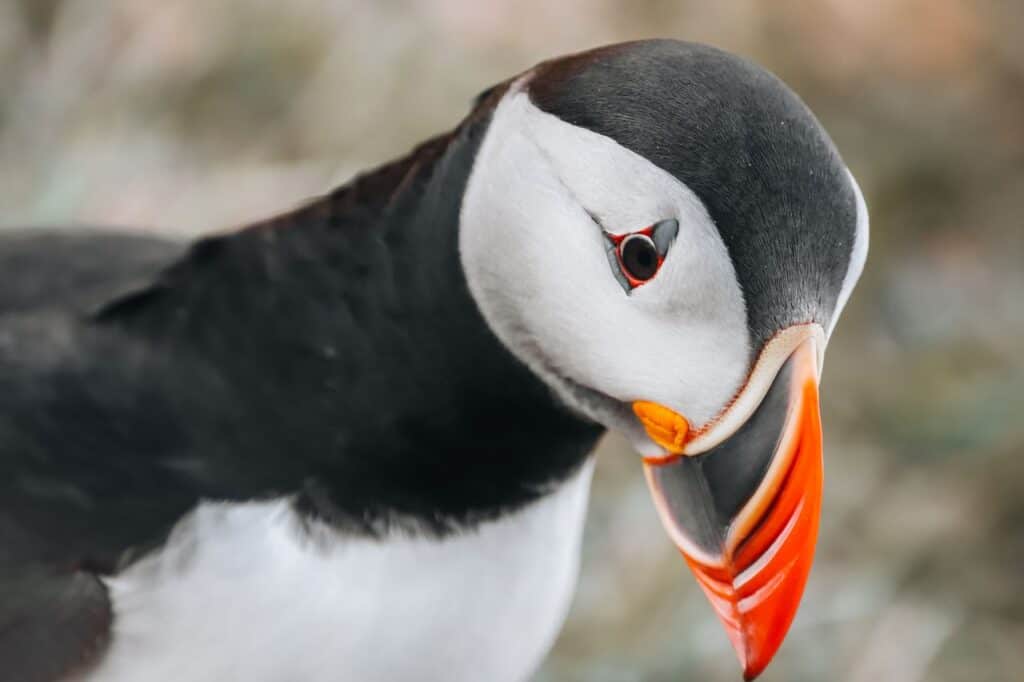
Let’s start with the thing that most people don’t even realise is possible on the Maine coast: watching Atlantic puffins in the wild.
Thanks to a decades-long conservation effort by the Audubon Society’s Project Puffin, several islands off the Maine coast now host thriving puffin colonies. The most famous is Eastern Egg Rock, about 6 miles offshore. These little birds — with their clown-bright beaks and frankly ridiculous flying style — were essentially wiped out from Maine’s islands by the early 1900s. The fact that they’re back is genuinely remarkable.
The best way to see them is on a boat tour out of Rockland or nearby Port Clyde. Tours typically run from late May through mid-August. If you’re in Rockland, it’s also worth stopping into the Project Puffin Visitor Centre on Main Street first. It has excellent exhibits on the restoration project and gives you a clear sense of what to look for once you’re on the water.
Practical tips:
- Book tours in advance — they sell out, especially in July and August
- Bring layers; it gets cold on the water even in summer
- Binoculars are a must
2. Sail on a Windjammer Schooner
This is, without question, the most iconic thing you can do in Midcoast Maine. The Maine Windjammer fleet — a collection of historic tall ships and schooners based mostly in Rockland and Camden — offers multi-day sailing cruises around Penobscot Bay, and there is honestly nothing else quite like it.
The schooners range from two-masted working vessels with a handful of cabins to larger ships that can carry 30+ passengers. You sail by day, anchor in coves and small harbours by night, eat absurdly good food on deck, and watch the sun set over the islands. It is the Maine coast at its absolute best.
The J. & E. Riggin
One of the most celebrated vessels in the fleet is the Schooner J. & E. Riggin, based out of Rockland. Built in 1927 as an oyster dredger on the Delaware Bay, she was purchased in 1975 by a couple from Rockland and lovingly converted into the windjammer she is today. She was declared a National Historic Landmark in 1992 — and she’s also won races, so she clearly still has a competitive streak.
The J. & E. Riggin offers 3- to 6-night voyages out of Rockland, taking you along the granite coastline, past spruce-covered islands and historic lighthouses. She has no engine — she’s powered almost entirely by sail, with a small yawl boat for tight harbours — and that alone makes her something special.
I’m planning a full dedicated article on sailing the J. & E. Riggin, so watch this space — there’s a lot more to say.
3. Join a Sailing Photography Workshop
Here’s one for the photographers: what if you could combine a multi-day windjammer cruise on the J. & E. Riggin with a proper photography workshop taught on deck?
That’s exactly what Coastal Maine Photo Tours offers. It’s led by Dee Peppe — a photographer and former photography professor based in Rockland. The workshop puts a small group aboard the J. & E. Riggin for five days on Penobscot Bay, with photography instruction woven throughout.
More Than Just Photography
Beyond the photography, it’s everything a windjammer cruise promises. Additionally, there are shore excursions to uninhabited islands, a lobster bake on an island beach (conditions allowing), the chance to help raise the sails, and evenings at anchor under a properly dark sky.
Dates run annually — check the Coastal Maine Photo Tours website for the current season’s availability. Spots are limited and the June cruise in particular tends to fill quickly, as it coincides with the start of the official sailing season and a fleet raft-up (‘Windjammer Gam’) with live music aboard.
If you love photography and the sea in roughly equal measure, this is a genuinely special thing to do.

4. Visit the Farnsworth Art Museum
Rockland has a genuine claim to being one of the best small-city art destinations in the US, and it’s largely down to the Farnsworth Art Museum on Elm Street.
The collection focuses on American art with a particular emphasis on Maine — and that means a serious amount of Wyeth. The Wyeth Centre houses works by all three generations: N.C., Andrew, and Jamie. Andrew Wyeth’s Christina’s World is one of the most recognisable American paintings of the 20th century, and the connection to Maine (the Olson House in Cushing, where the painting was set, is a Farnsworth property you can actually visit) gives the collection a real sense of place.
Beyond the Wyeths, the Farnsworth has one of the most significant public collections of Louise Nevelson’s work anywhere in the world. It’s a proper world-class museum sitting in a small Maine harbour town — genuinely surprising and worth a couple of hours at minimum.
Admission: check the Farnsworth website for current pricing and hours, as these vary seasonally.
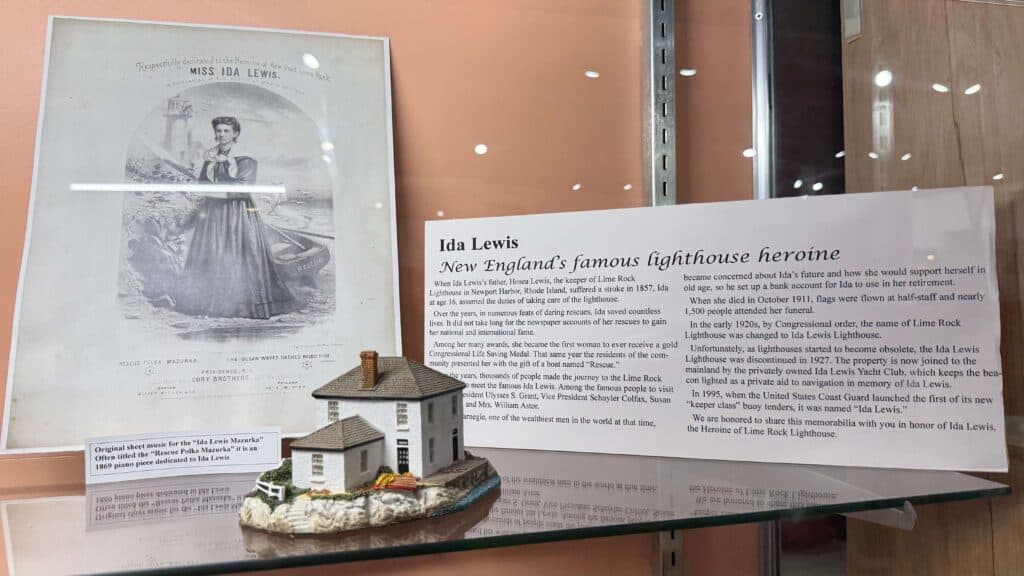
5. Maine Lighthouse Museum
Also on the Rockland waterfront, the Maine Lighthouse Museum is a wonderfully specific institution dedicated to — you guessed it — lighthouses. Maine has more lighthouses than any other state in the US (over 60 active ones), so there’s plenty to cover.
The collection includes lighthouse lenses, keeper artefacts, rescue equipment and foghorns, and it’s all housed in a purpose-built space with real passion behind it. If you’re fascinated by the lighthouse coastline or planning to do the Maine Lighthouse Scenic Cruise (which I can strongly recommend from my Portland visit), this is a great primer.
It’s small enough to do in an hour, and the entry price is very reasonable.
6. Walk the Rockland Breakwater (and Its Lighthouse)
One of Rockland’s most underrated experiences is also completely free: the walk out to Rockland Breakwater Lighthouse.
The breakwater itself stretches almost a mile into Penobscot Bay — nearly 700 metres of large granite blocks that you simply walk along, with the open ocean on both sides and the harbour behind you. At the end sits the lighthouse, an 1902 keeper’s cottage with a light tower attached, and on clear days the views across the bay to the Camden Hills are genuinely spectacular.
The walk takes about 20-25 minutes each way and is flat, but the granite blocks are uneven so wear sensible shoes. It can get very exposed and windy, so bring a layer.
This is a 100% must-do in Rockland. Do it at sunset if you can.
7. Hike Camden Hills State Park
Camden is one of very few places in the US where you can stand on a mountain summit and look straight down at the ocean. Camden Hills State Park sits right on the edge of town, and a hike up Mount Battie rewards you with one of the most dramatic views in all of New England.
You can hike to the summit on several trails — the most popular being the Megunticook Trail or the shorter, steeper Mount Battie Trail from the town side — or drive up via the auto road if you’d rather save the legs for kayaking later. At the top, a stone tower gives you a 360-degree panorama of Penobscot Bay, its islands, and the surrounding hills.
E.B. White wrote about Camden, and Edna St. Vincent Millay grew up here — both of them clearly had good taste in landscapes.
Tips: The park charges a small entry fee. Go early in the morning to beat the crowds in peak summer.

8. Meet André the Seal in Rockport
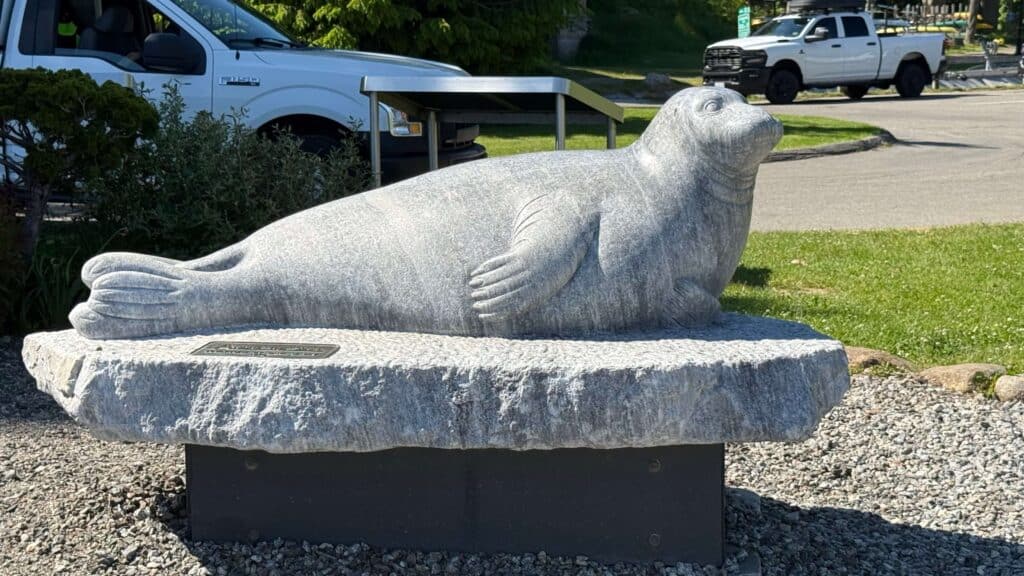
Between Rockland and Camden sits the tiny harbour village of Rockport — and if you’ve never heard of it, there’s a very good reason to stop there: it’s the hometown of André the Seal.
André was a harbour seal, born on a ledge in Penobscot Bay in May 1961 and orphaned almost immediately. He was found and raised by a local man named Harry Goodridge, a Rockport warden and diver with a particular gift for connecting with animals. What followed is one of the more extraordinary human-animal stories you’ll come across: André essentially chose to stay. Each autumn he’d be released into the Atlantic, and each spring he’d swim hundreds of miles back up the coast to Rockport harbour, arriving in time for summer.
He became a genuine celebrity — appearing in Sports Illustrated, Life, and on national television, and eventually becoming the subject of a 1994 Paramount film simply called André. He lived in and around Rockport for 25 years until his death in 1986.
Today, a bronze statue of André by sculptor Jane Wasey stands in Rockport Marine Park, right on the harbour. It’s a short walk from a car park and takes about five minutes, but the surrounding harbour is lovely enough that you’ll want to stay longer. The park looks out over a small working harbour with a waterfall tumbling into it — genuinely one of the prettiest spots in all of Midcoast Maine and very easy to overlook if you don’t know it’s there.
9. Explore Camden Village
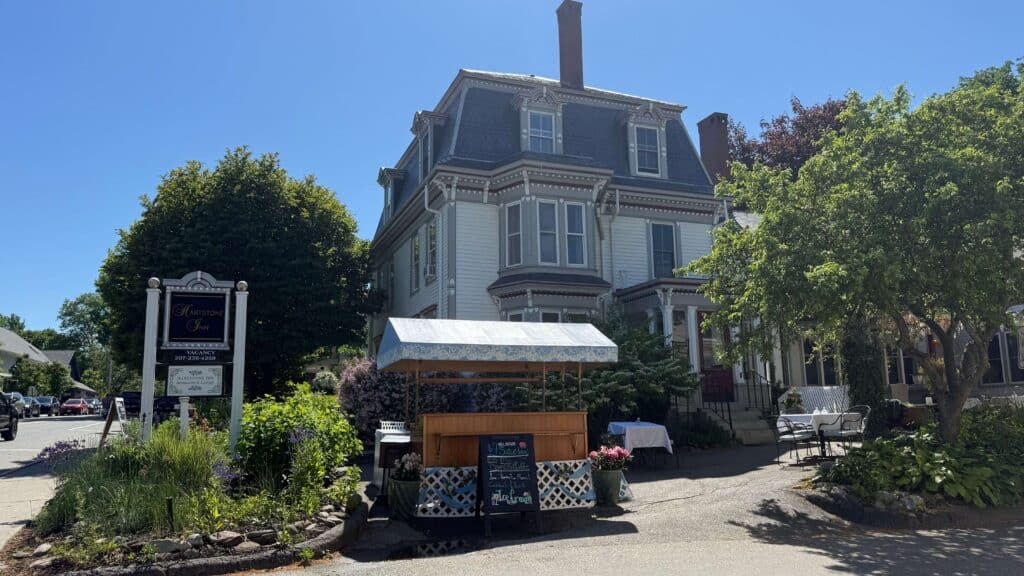
Camden’s village centre is the kind of place that makes you slow down without quite meaning to. The harbour is lined with schooners and lobster boats, the main street is full of independent shops and galleries, and the whole thing sits at the foot of forested hills. It photographs beautifully, but it also just feels good to walk around.
Worth seeking out:
- Camden Harbour itself — wander the docks and watch the windjammers come and go
- The Camden Farmers’ Market (in-season, check local listings for current days/times)
- Zoot Coffee or one of the other independent cafés for a morning coffee before a hike
- Sea Bags on Bay View Street — iconic Maine brand making tote bags and accessories from recycled sailcloth. If you picked one up in Portland, you’ll know exactly why it’s worth a stop (and yes, there are always new designs). If you haven’t come across Sea Bags before, my Portland guide is a good introduction.
- Village Candy and Gift Shoppe (53 Bay View St) — a lovely little sweet shop with over 50 local artisans’ gifts alongside a great selection of candy and confections. Dangerous to walk past.
- The stretch of independent boutiques and bookshops along Bay View Street and Chestnut Street
If you’re coming from Portland for a day trip, Camden is an easy 90-minute drive up Route 1.
10. Attend the Maine Lobster Festival
If your visit falls in late July or early August, Rockland’s Maine Lobster Festival is one of the great American food events. It’s been running for decades, it draws tens of thousands of visitors, and the name tells you exactly what to expect: a huge amount of lobster, on the waterfront, in the sunshine.
Beyond the eating (which is the main point), there are live music stages, a parade, a sea goddess pageant, and a general atmosphere of mid-summer Maine at its most festive. Lobster is served in every possible form, but the traditional boiled lobster with drawn butter is obviously the move.
Book accommodation well in advance if you’re planning to attend — the whole midcoast fills up.
11. Get Out on Penobscot Bay
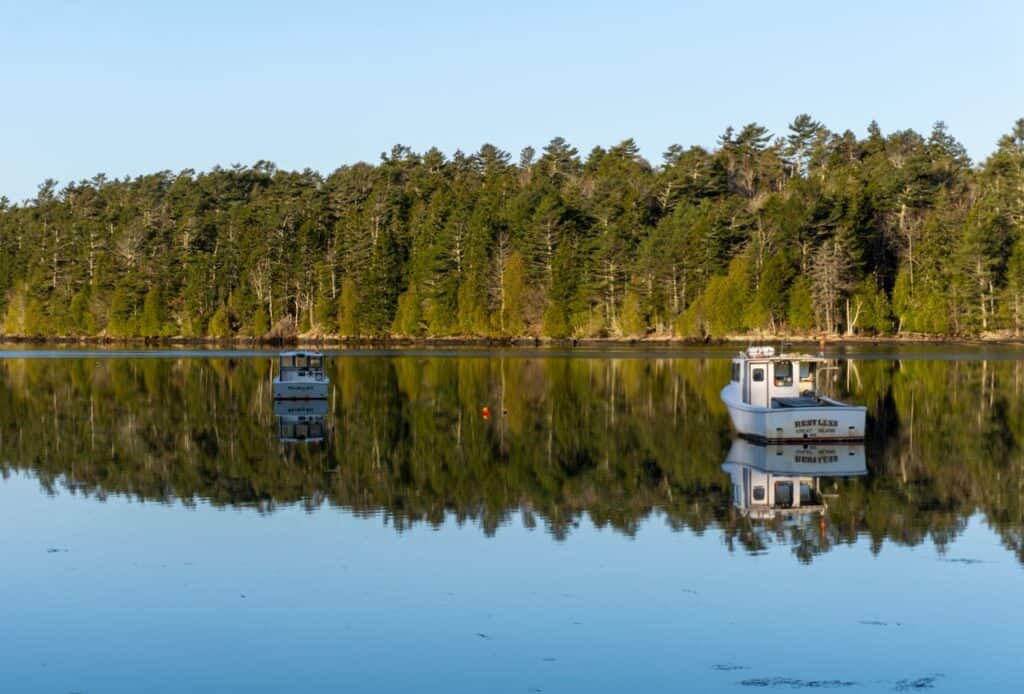
Whether you’re sailing, kayaking, or taking a passenger ferry, getting out onto Penobscot Bay is non-negotiable. The bay is scattered with islands — Vinalhaven, North Haven, Islesboro — some of which have small year-round communities and are reachable by Maine State Ferry.
A day trip to Vinalhaven is particularly good: the ferry crossing itself is beautiful, and the island has a quiet, end-of-the-road quality that feels totally removed from the mainland. There are good walks, a swimming quarry, and simple lobster-shack food.
For sea kayaking, there are several outfitters in the Rockland and Camden area offering guided half-day and full-day paddles around the bay’s coastline and islands.
For something a little different – head over to Belfast for a haul lobster traps like a local.
12. What to Eat: Lobster and Blueberries
No trip to Midcoast Maine is complete without eating your way through two of the state’s most iconic ingredients. Consider this non-negotiable.
Lobster
Maine lobster is the real thing — sweeter and more tender than most of what you’ll find elsewhere. In Rockland and Camden, you’re eating it right at the source. The classic move is a whole boiled lobster with drawn butter, ideally eaten outside with a harbour view and a pile of napkins. You’ll find it at waterfront shacks, sit-down restaurants, and — if you time it right — straight off a boat at the dock.
If you attend the Maine Lobster Festival in early August, you’ll also encounter lobster in every other conceivable form: lobster rolls, lobster bisque, lobster mac and cheese. All good. But the whole lobster is the one.
Maine Blueberries
Wild Maine blueberries are smaller, more intensely flavoured, and considerably better than the supermarket variety. They’re a state institution. In season (mid-July through August), you’ll find them everywhere — at farmers’ markets, farm stands, and on restaurant menus. However, the thing you absolutely must try is blueberry pie. When it’s made with fresh wild blueberries in peak season, it’s one of those things that’s hard to forget. Look for it at local bakeries, diners, and any café worth its salt in the Camden and Rockland area.
Out of season, you’ll still find blueberry jam, blueberry syrup, and dried blueberries sold throughout the region — a good edible souvenir if you’re looking for something to bring home.
Where to Eat in Rockland: Main Street Markets
For dinner in Rockland, 13 Oak on Oak Street is an absolute must. It’s an intimate wood-fired restaurant with a Mediterranean-leaning menu, and the crab cake is genuinely one of the best things I’ve eaten — all crab, no filler, and served with herb mayo and fresh greens. It’s a small place so book ahead. Open from 5pm Monday to Friday.
For lunch, don’t miss Main Street Markets at 435 Main Street. It’s an all-day café, deli, and marketplace right in the heart of town. I had one of the best sandwiches I can remember here — a turkey, bacon, cheese and lettuce that was genuinely hard to stop eating. It’s the kind of no-fuss, brilliant local spot that every town should have. Go early as it’s popular and closes at 5pm (closed Sundays).
Where to Stay in Rockland and Camden
Both towns have good accommodation options, though they have different feels.
Rockland is more budget-friendly with a handful of well-regarded inns and B&Bs along or near Main Street. The Berry Manor Inn is a frequently recommended Victorian B&B with a great breakfast.
Camden skews a bit more upscale, particularly in peak season. The Camden Windward House is a beautiful B&B right in the village, and there are several good inns within walking distance of the harbour.
If you’re flexible, staying in Rockland and day-tripping to Camden (8 miles, about 15 minutes) makes solid logistical sense and is easier on the wallet.
FAQ
How far is Rockland from Portland, Maine? Rockland is about 80 miles north of Portland via Route 1, roughly a 90-minute drive. It’s very doable as a day trip from Portland, though I’d strongly recommend staying at least one night.
When is the best time to visit Rockland and Camden, Maine? July and August are peak season — warmest weather, all the schooners sailing, puffins on the islands, and the Lobster Festival in early August. Late June and September are excellent shoulder-season alternatives with smaller crowds and lower accommodation prices. October is stunning for fall foliage on the Camden Hills.
Can you do Rockland and Camden in a day trip from Portland? Yes, but you’ll be rushing. A full day gives you time to walk the breakwater, visit the Farnsworth, and have lunch in Camden — but to properly enjoy it (especially if you want a schooner sail or puffin tour), plan for at least two nights.
How do I see puffins in Rockland, Maine? Visit the Project Puffin Visitor Centre on Main Street for background and tour information, then book a boat tour — several operators run trips to puffin islands from Rockland and nearby Port Clyde. Tours run late May through mid-August.
What is the J. & E. Riggin? The J. & E. Riggin is a historic two-masted schooner and National Historic Landmark based in Rockland, Maine. Built in 1927 as an oyster dredger, she now offers 3- to 6-night windjammer sailing cruises around Penobscot Bay. She’s one of the most beloved vessels in the Maine Windjammer fleet.
Is Camden, Maine worth visiting? Absolutely. Camden’s combination of a working schooner harbour, excellent hiking, a charming village centre, and sweeping views of Penobscot Bay makes it one of the most picturesque destinations on the entire US East Coast.
Do I need a car to visit Rockland and Camden? A car makes things significantly easier — Route 1 connects the two towns and the surrounding area. That said, both village centres are walkable once you arrive, and the Concord Coach Lines bus from Portland stops in Rockland.
Final Thoughts
Rockland and Camden are the kind of place that gets under your skin. They’re not flashy, they’re not overrun, and they’re doing something that a lot of coastal destinations have lost: a genuine sense of place. The puffins, the schooners, the breakwater at sunset, the Farnsworth — it all adds up to something quietly brilliant.
If you’ve been thinking about a Maine trip beyond Portland, this is where to go next.
Enjoyed this guide? Save it for later on Pinterest or share it with someone who’d love coastal Maine!
Find me on Instagram and Facebook for more travel from someone who actually goes to these places.
If this post helped you plan your trip, you can buy me a coffee — it genuinely means a lot!

Latest Posts
- Nar Phu Trek and Annapurna Circuit Trek: Two Himalayan Routes, One Deeper Journey
- A Guide to Himalayan Adventures in Nepal: Trekking, Helicopter Tours and Peak Climbing
- Annapurna Circuit Trek: What to Expect?
- Choosing Your Himalayan Adventure in Nepal: From Remote Treks to Peak Expeditions
- Exploring the Natural Wonders of New Zealand’s South Island