


Affiliate Disclosure: This post contains affiliate links. If you book through them, I may earn a small commission at no extra cost to you — this helps me keep creating free, detailed travel guides. I only recommend services and products I genuinely use and trust after years of travel across Asia.
Choosing where to stay in Jeju makes a bigger difference than you might expect. The island is larger than it looks on a map, and basing yourself in the wrong spot can mean long drives every day — or missing things entirely. The good news is that each area has a distinct character, and once you know what suits your travel style, the decision is straightforward. Here is my honest breakdown of where to stay in Jeju Island and who each area is best suited for.
Jeju City — Best for First-Timers and Easy Access
Jeju City is the island’s main hub, located on the northern coast, and it is where most visitors land. It has the best transport connections, the widest range of accommodation across all budgets, the most restaurant and café options, and easy access to the airport. If this is your first visit and you are not yet sure how you want to move around the island, starting here is the sensible choice.
The city itself has a lively harbour area, good seafood markets, and a surprisingly vibrant food scene. It is not the most scenic base, but it is the most practical — and for shorter trips, practicality matters.
Best for: First-timers, travellers without a car, those on tighter budgets, anyone who wants variety in dining and nightlife.
Seogwipo — Best for Nature Lovers and a Slower Pace
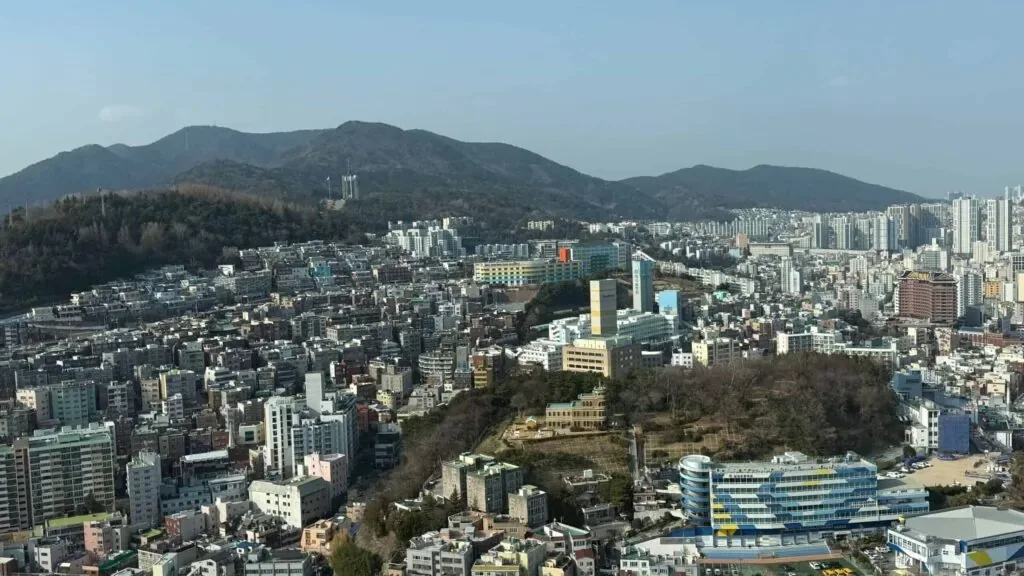
On the southern coast, Seogwipo is my personal favourite part of Jeju. It is quieter, greener, and noticeably more scenic than the north — with dramatic cliff walks, waterfalls that drop straight into the sea (Cheonjiyeon and Jeongbang are both excellent), and a relaxed atmosphere that suits travellers who want to slow down. The Olle Trail routes in this area are among the best on the island.
Accommodation options are more limited than Jeju City, and it takes longer to reach some of the east coast sights, but the trade-off in scenery and atmosphere is worth it for most people.
Best for: Nature lovers, couples, repeat visitors, anyone who wants a quieter and more scenic base.
Jungmun — Best for Families and Resort-Style Comfort
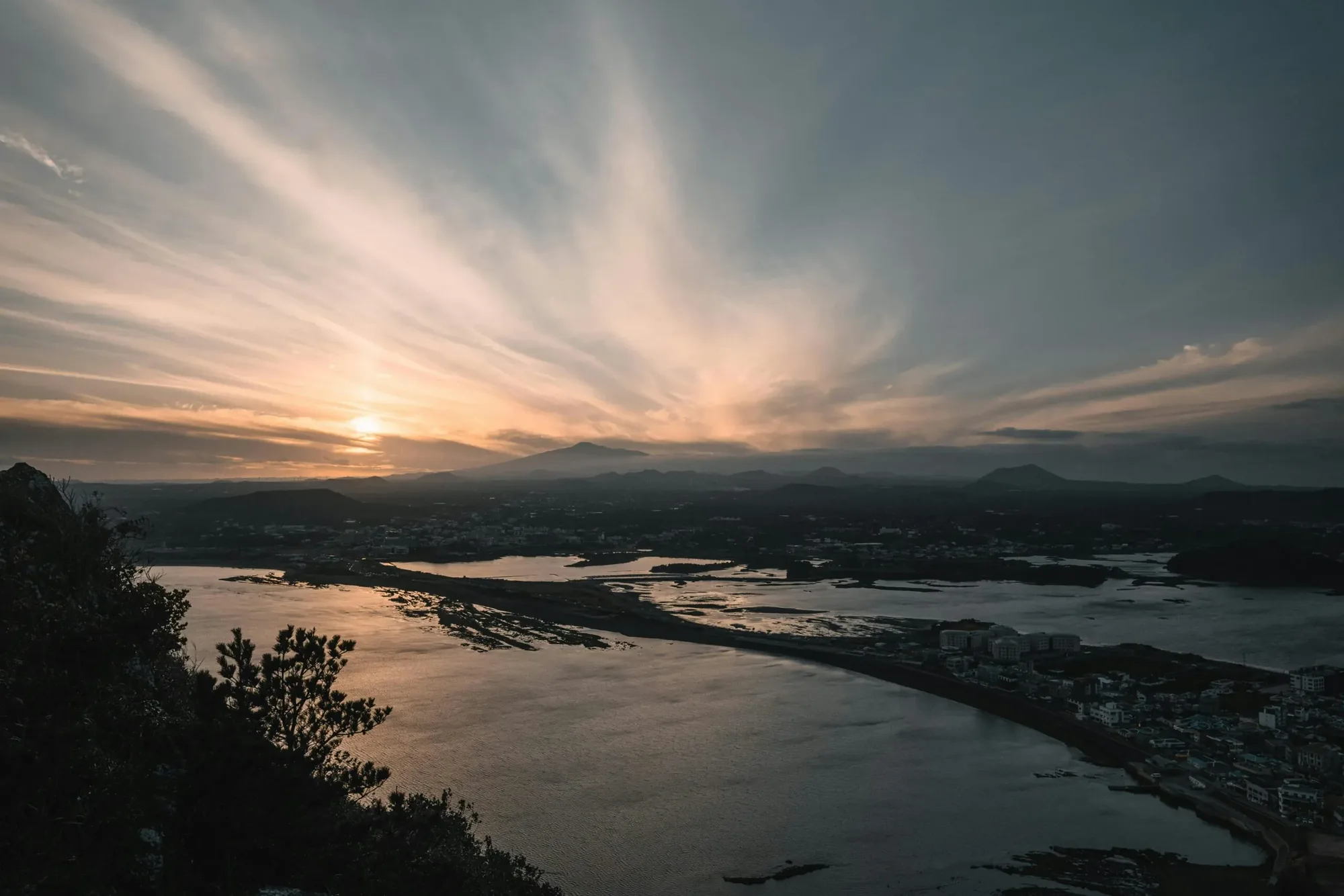
Jungmun sits between Seogwipo and the western coast and is Jeju’s main resort district. It is home to several large international hotels, a well-maintained beach, and attractions like the Teddy Bear Museum and the Pacific Land marine park — all of which make it the default choice for families travelling with children.
It is more polished and touristy than other parts of the island, and dining options within the resort area can be overpriced. But the facilities are excellent, the beach is beautiful, and it is well-positioned for exploring both the south and west coasts.
Best for: Families, travellers who want resort amenities, those on a honeymoon or special occasion trip.
Hamdeok — Best for Beach Lovers Who Want Peace and Quiet
Hamdeok is a small coastal village on the north-east coast with one of the most striking beaches on the island — clear turquoise water, a sheltered bay, and a relaxed village feel that is a world away from Jeju City’s bustle. It has grown in popularity over recent years, but it still feels genuinely low-key compared to the resort areas.
The trade-off is that dining and activity options are limited in the village itself, and you will need a car to comfortably explore the rest of the island from here.
Best for: Beach lovers, those who want quiet evenings, photographers (the sunsets are excellent), travellers with their own transport.
Aewol — Best for Cafés, Scenery, and Instagram-Worthy Moments
Aewol, on the north-west coast, has become one of Jeju’s most talked-about areas in recent years — thanks largely to its clifftop cafés, dramatic coastal scenery, and the Handam Beach area. Iho Tewoo Beach (known for its white horse sculptures) is nearby, and the sunset views along this stretch of coast are genuinely beautiful.
It is not the most practical base if you want to cover a lot of ground, but for a longer stay or a relaxed, café-heavy trip, it is a lovely choice.
Best for: Solo travellers, couples, creative travellers, those staying five or more days who want to explore beyond the main tourist trail.
Seongsan — Best for Sunrise, Udo Island, and East Coast Adventures
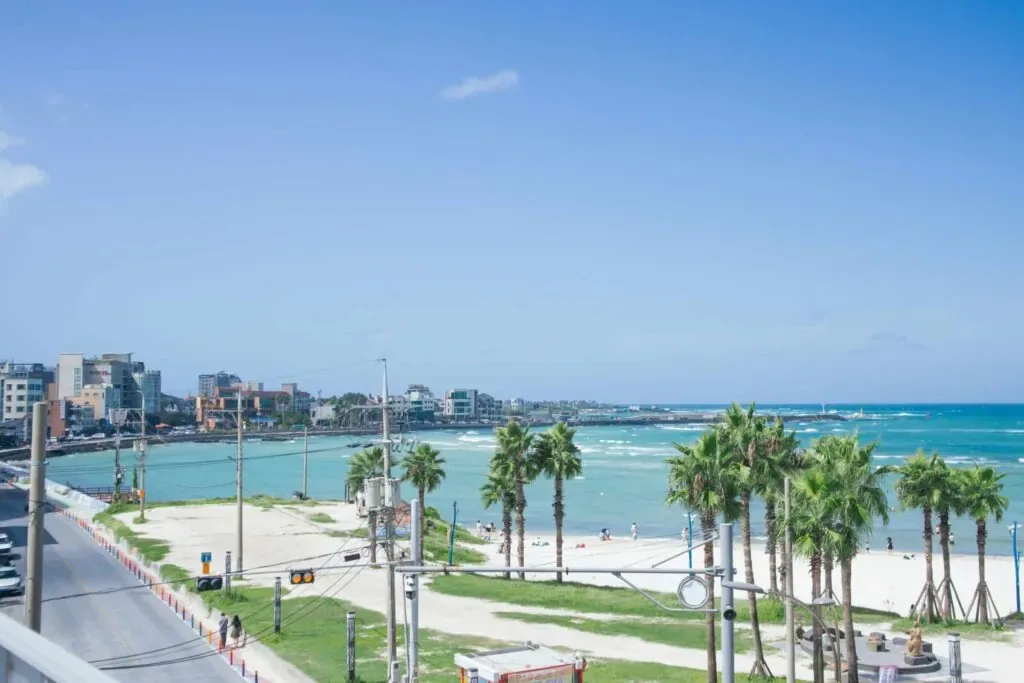
Seongsan sits on the eastern tip of the island and is home to Jeju’s most iconic sight — Seongsan Ilchulbong (Sunrise Peak). Staying here means you can walk to the crater trail before sunrise without a long drive, and you are perfectly placed for a morning ferry to Udo Island. The east coast in this area has a wilder, more rugged feel than the resort south, and accommodation tends to be small guesthouses and boutique stays rather than large hotels.
It is not the right base if you want central access to everything, but if your trip is focused on the east coast and you want an early start at Seongsan, it is worth considering — particularly for a couple of nights rather than your whole stay.
Best for: Sunrise seekers, adventure travellers, those doing the Udo Island day trip, east coast hikers.
A Quick Note on Getting Around
Wherever you base yourself in Jeju, having your own transport makes the trip significantly better. The bus network covers most major sights but runs infrequently and journey times are long. Renting a car or scooter gives you the freedom to explore at your own pace — which is exactly how Jeju is meant to be experienced.
👉 Click the link if you require Car hire on Jeju Island
5 Questions People Actually Ask About Staying in Jeju
1. Is it better to stay in one place in Jeju or move around? For most trips of five days or fewer, staying in one base is easier and less stressful. Jeju is not enormous, and with a car you can reach most parts of the island within an hour. If you are staying longer, splitting your time between the north and south (perhaps Jeju City for the first half and Seogwipo for the second) gives you a much richer experience.
2. How far is the accommodation from the airport? Jeju International Airport is in the north of the island, close to Jeju City. From there: Seogwipo is roughly 40–50 minutes by car, Jungmun around 30–40 minutes, Hamdeok around 20 minutes, and Aewol around 20–25 minutes. All areas are accessible on the day of arrival.
3. What is the best area to stay in Jeju for someone who does not want to rent a car? Jeju City is the most practical option without a car. It has the best bus connections, the most walkable centre, and the easiest access to taxis and airport transfers.
4. Are there good budget accommodation options in Jeju? Yes — Jeju City has the widest range of budget options, from guesthouses to affordable business hotels. Hamdeok also has some well-priced guesthouses. The Jungmun resort area skews more expensive, particularly in peak season.
5. When does Jeju get busy, and should I book accommodation in advance? Jeju is busiest during South Korean national holidays (particularly Chuseok in autumn and Seollal in winter), the summer beach season (July–August), and cherry blossom season in spring (late March to early April). Book at least two to three months ahead during these periods, especially for Jungmun and Seogwipo.
If you want to plan your itinerary on Jeju Island start here, with the best things to do in Jeju Island guide.
Latest Articles
- Nar Phu Trek and Annapurna Circuit Trek: Two Himalayan Routes, One Deeper Journey
- A Guide to Himalayan Adventures in Nepal: Trekking, Helicopter Tours and Peak Climbing
- Annapurna Circuit Trek: What to Expect?
- Choosing Your Himalayan Adventure in Nepal: From Remote Treks to Peak Expeditions
- Exploring the Natural Wonders of New Zealand’s South Island
Thanks for taking the time to read this article. I hope this post has given you the information you need. If you have any recommendations, tips or advice, I would love for you to share them in the comment section below!
This post may contain affiliate links, meaning we may receive a commission at no extra cost if you purchase through a link. Please see our full disclosure for further information.
Check out my Instagram page or join the Truly Expat Facebook group.
Running this blog takes a lot of coffee (and countless hours exploring every destination!). If you found this helpful and want to support more honest, detailed travel guides and itineraries, you can buy me a coffee. No pressure though – I’m just happy you’re here and hope you have an incredible adventure! 🙂

Pin It For Later