

Tulsa doesn’t shout about itself — and that’s exactly why it’s worth your time. Here’s the honest guide to a city that keeps on giving.
Tulsa, Oklahoma is one of those cities that keeps getting overlooked — and it really shouldn’t be. Whether you have a weekend or just a quick stopover, there is a genuinely impressive amount to see and do here. You’ve got world-class art museums, one of the most beautifully designed public parks in the United States, deep music history, and a downtown so packed with Art Deco architecture that it’s been called the Art Deco Capital of the World. Not bad for a city most people associate mainly with oil fields.
So — is Tulsa worth visiting? Absolutely. The best things to do in Tulsa range from free afternoons at the Gathering Place to fascinating, sobering tours of the Greenwood District. You can spend a day in museums that would hold their own in any major city, eat very well, and still feel like you’ve discovered something that hasn’t been overrun by tourists yet.
Here’s where to start.
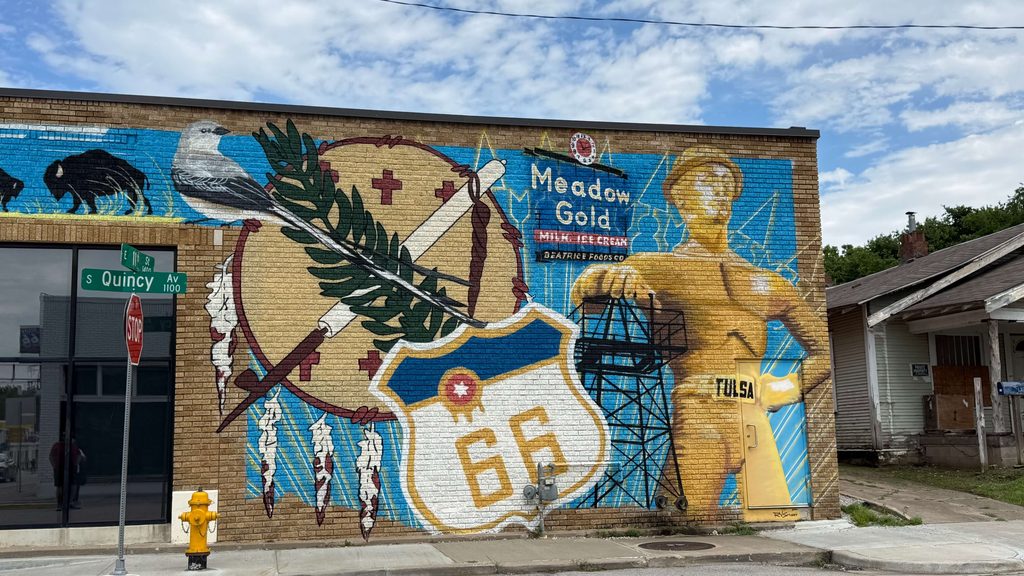
Table of Contents
Start at the Gathering Place — It’s Free and It’s Brilliant
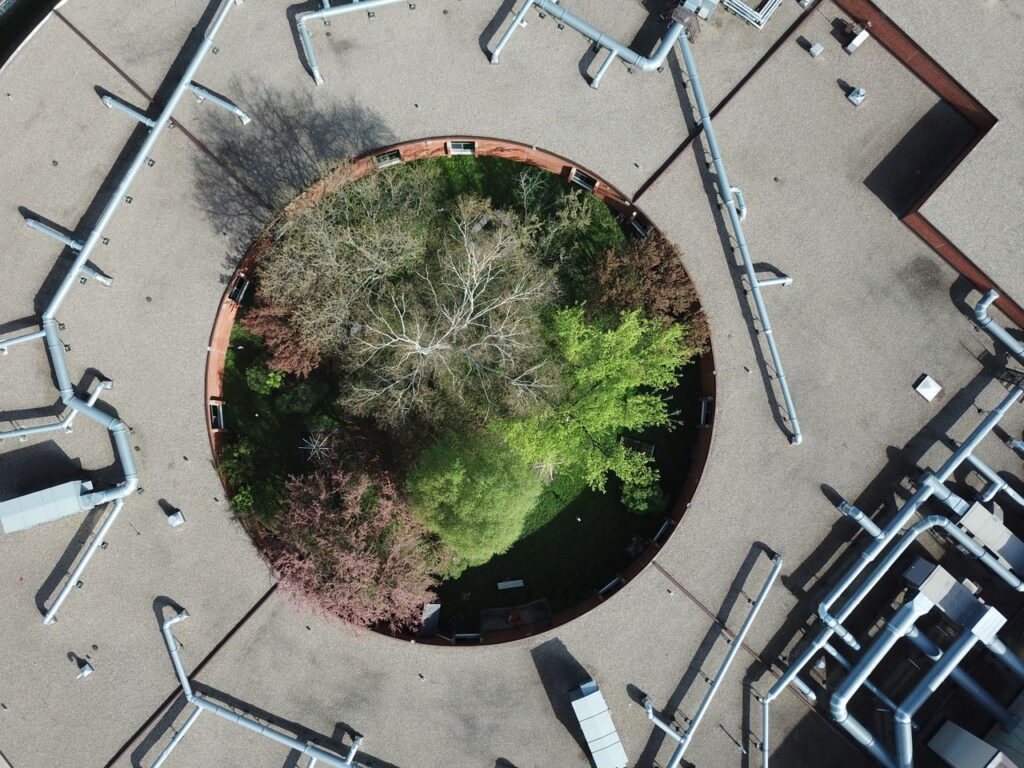
If you only have one afternoon in Tulsa, spend it at the Gathering Place. This 100-acre riverside park on the banks of the Arkansas River opened in 2018 and quickly became one of the finest public parks in the entire country. It cost over $465 million to build — mostly from private donations — and entry is completely free.
The design is extraordinary. There are playgrounds unlike anything you’ve seen (adults wander through them just as happily as children), a boathouse, open lawns, beautiful landscaping, a beach area, and event spaces used year-round. It gives you a real sense of what Tulsa residents are proud of about their city. Go in the morning before it gets busy, grab a coffee, and just wander.
📍 Practical info Gathering Place is free to enter and open daily. It’s easily combined with a riverside walk.
The Greenwood District — A History Everyone Should Know
Before you leave Tulsa, visit the Greenwood District. In the early 1900s, this neighbourhood was home to one of the wealthiest Black communities in America — so prosperous it was known as Black Wall Street. In May 1921, a violent and devastating race massacre destroyed it almost entirely. Over 35 blocks were burned to the ground.
Today, the district is being slowly and thoughtfully rebuilt, and it’s an essential part of understanding Tulsa’s history. The Greenwood Cultural Center and the 1921 Tulsa Race Massacre Centennial Commission both offer resources, exhibits, and context.If you can, walk it with a local guide — the context they bring makes all the difference.
If you’re interested in exploring more of America’s complex history while travelling, Philadelphia in one day is a good companion read.
“Greenwood isn’t just Tulsa’s story — it’s American history that most people were never taught. Go, and take the time to really listen.”
Art Deco Architecture: Tulsa’s Crown Jewel
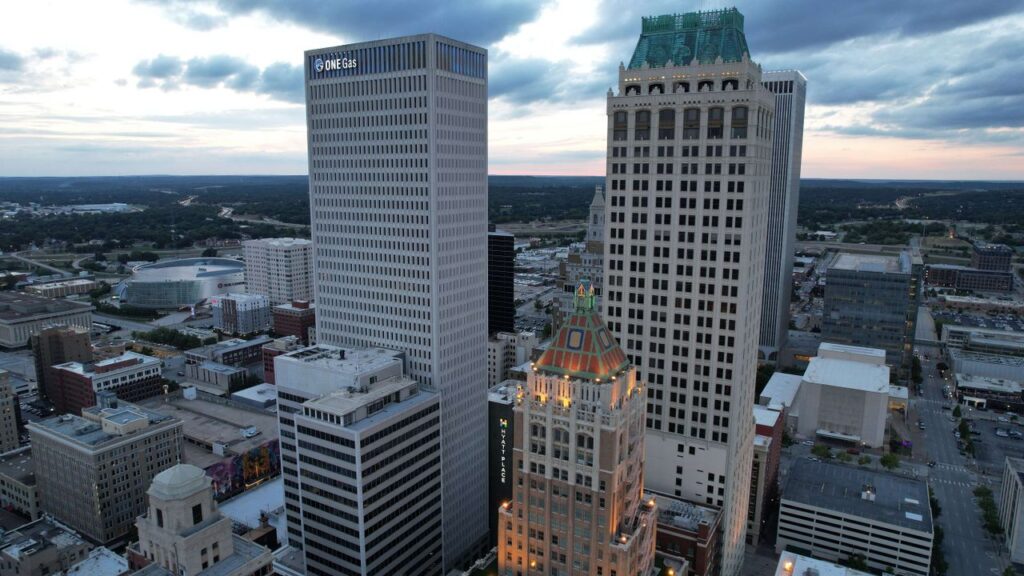
Downtown Tulsa is genuinely jaw-dropping if you’re into architecture. During the oil boom of the 1920s and 30s, the city’s newly minted oil barons commissioned some of the most ambitious Art Deco buildings in the United States — and a remarkable number of them are still standing. In fact, Tulsa has one of the largest concentrations of Art Deco architecture outside of New York City. You could spend half a day just wandering downtown with your neck craned upward.
The good news: you can do this completely free, on foot, in a compact area. Here’s a loose self-guided route that covers the highlights.
Start: Boston Avenue Methodist Church
Begin here, on Boston Avenue about a mile from the city centre. This 1929 church is widely considered one of the finest examples of Art Deco ecclesiastical architecture anywhere in the world — a bold, soaring tower clad in terracotta and geometric detail. It was designed by Adah Robinson and Bruce Goff when Goff was just 22 years old. Tours run most days; admission is free, though donations are appreciated.
Head Downtown: The Philtower and Philcade
Drive or walk north to downtown and find the Philtower Building on South Boston — a 24-storey oil-boom tower completed in 1927, with an ornate Gothic-meets-Deco lobby that you can walk straight into. Right next door is the Philcade Building, connected via an internal arcade lined with original tilework. Together they’re two of the most beautifully detailed buildings in the city.
Continue: Mid-Continent Tower and Tulsa Club Building
A short walk away, the Mid-Continent Tower and the Tulsa Club Building are both landmark examples of the period. The Tulsa Club, on East Second Street, has been restored and reopened as a boutique hotel — which means you can actually go inside for a drink and appreciate the interior properly. Worth every penny of a coffee at the bar.
Finish: The Union Depot
End at the Union Depot on South Boston — a 1931 Zigzag Moderne masterpiece that once served the great railroad routes across America. It now houses the Oklahoma Jazz Hall of Fame, and the building alone is reason enough to stop.
“Tulsa has more Art Deco buildings per square mile than almost anywhere else in the world. Most visitors walk right past them without realising what they’re looking at.”
Woody Guthrie Center — Small Museum, Big Impact
This is a must if you have any love of American folk music or social history. The Woody Guthrie Center, in the Brady Arts District, holds the world’s largest collection of Guthrie’s personal archives — manuscripts, artwork, letters, instruments, and recordings. The man who wrote This Land Is Your Land grew up just a few hours from here, and the museum does a beautiful job of placing his work and activism in context.
It takes about 90 minutes and is one of the most thoughtfully curated small museums I’ve visited anywhere. Admission is modest and well worth it.
Philbrook Museum of Art — An Unexpected Gem
The Philbrook is one of those places that makes you stop and think: how is this not more famous? Set in a stunning 1920s Italian Renaissance villa with 23 acres of formal gardens, the museum holds an impressive collection of Native American art, European paintings, and contemporary works. The building alone is worth the trip.
Go on a Tuesday evening when they occasionally open late with live music in the garden — it’s a lovely Tulsa evening out.
Gilcrease Museum — The World’s Largest Collection of American West Art
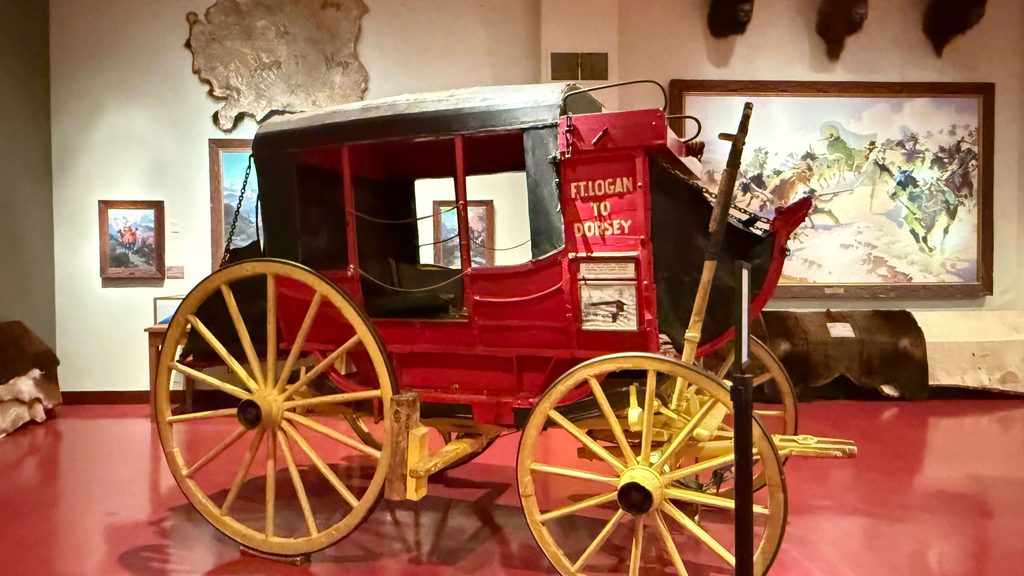
The Gilcrease is genuinely world-class and often flies under the radar. It holds the largest and most comprehensive collection of art and artefacts of the American West anywhere in the world — over 350,000 items. The collection spans thousands of years of Native American history and culture, alongside Western paintings, documents, and maps you won’t find anywhere else.
It’s a proper museum experience and easily takes three to four hours. Budget the time.
Route 66 Nostalgia in the Heart of Tulsa
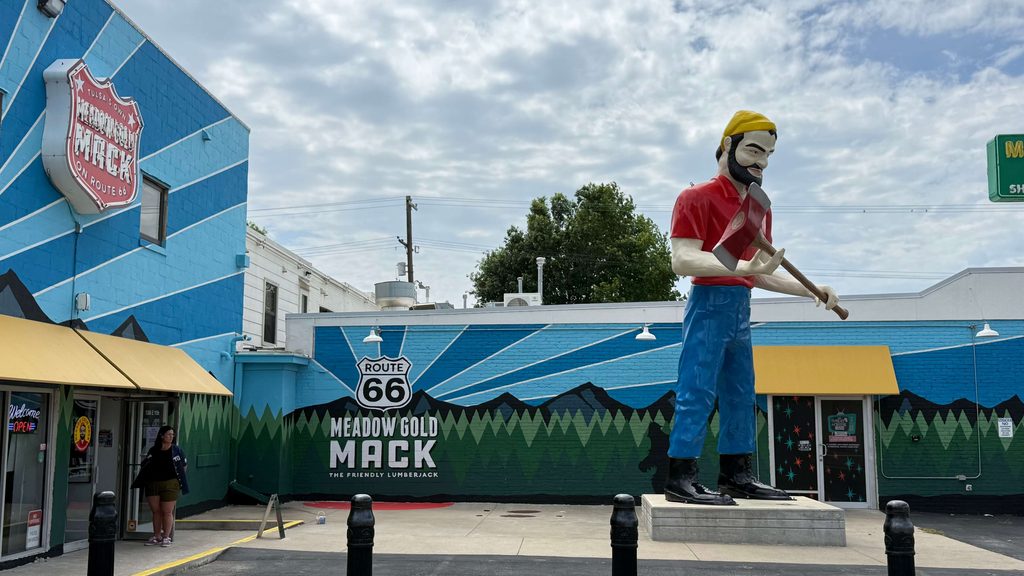
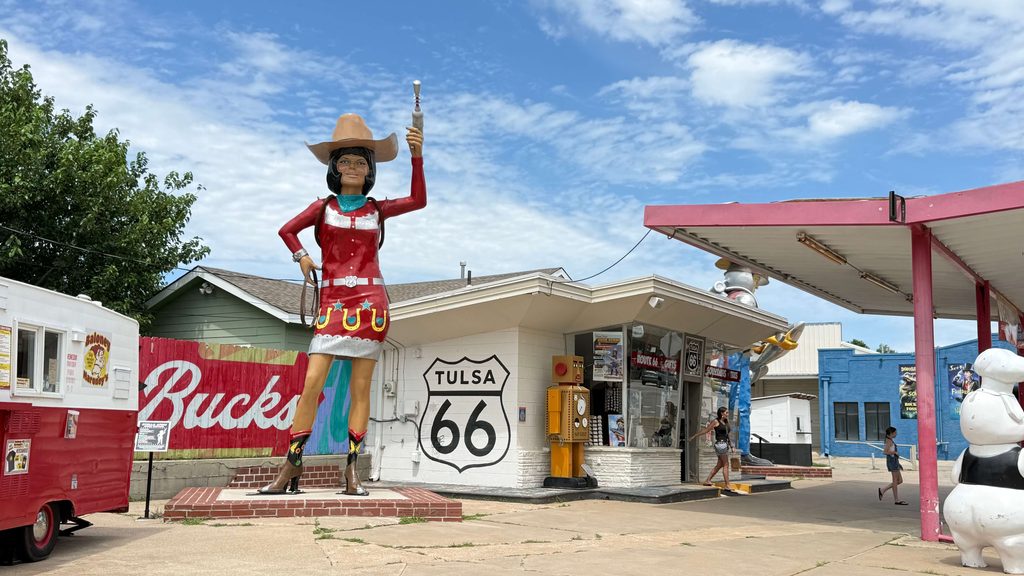
Tulsa sits right on the original Route 66, and there are some brilliant remnants to explore. The Blue Whale of Catoosa — a quirky giant blue whale sculpture about 15 miles east of downtown — is an unmissable bit of roadside Americana. Closer in, the Cyrus Avery Centennial Plaza on the Arkansas River commemorates Tulsa’s role as the “Birthplace of Route 66.”
The Blue Dome District — Where to Eat and Drink
Downtown Tulsa’s Blue Dome District is the city’s most vibrant food and drink neighbourhood, centred around a 1920s gas station (the Blue Dome itself — now a listed landmark). The streets around it are lined with good independent restaurants, cocktail bars, and weekend markets. It’s very walkable and unpretentious.
A few local recommendations worth seeking out: Elgin Park for brunch, Bird & Bottle for dinner, and Duet for cocktails in a beautiful space. The Thursday evening farmers’ market in the district is a lovely way to spend a summer evening.
And don’t miss Bao Soup Dumpling on East 11th Street — a small, unpretentious spot serving some of the best soup dumplings you’ll find in Oklahoma. It sits right on the historic Route 66 corridor through Tulsa, which makes it a satisfying stop on any driving day. The xiao long bao are the thing to order.
For a proper Tulsa breakfast, Tally’s Café is an institution. It’s been feeding the city since 1962 and everything about it is gloriously no-frills — big portions, bottomless coffee, friendly staff, and a diner atmosphere that hasn’t tried to be anything other than itself. Go for the eggs and pancakes and arrive a little early on weekends — locals know what they’re doing.
And if you only do one very Oklahoma thing while you’re in Tulsa, make it a stop at Braum’s. It’s a regional chain beloved across Oklahoma and neighbouring states, and for good reason. Order a burger, a milkshake, or an ice cream — or all three, no judgement. It’s fresh, honest, and genuinely delicious. The ice cream alone is worth the detour.
A Few More Things Worth Doing in Tulsa
Have a Drink at the Mayo Hotel
The Mayo Hotel is one of Tulsa’s finest Art Deco landmarks — an 18-storey beauty that opened in 1925 and has been beautifully restored. Even if you’re not staying here, come for a drink at the rooftop bar. The views over downtown are excellent, the interiors are gorgeous, and it feels like a proper Tulsa evening out.
Find the Centre of the Universe
This is Tulsa’s best-kept quirky secret. In the middle of a small pedestrian bridge in downtown, there’s a circular brick structure where something strange happens to sound — stand in the centre, speak, and your voice echoes back to you much louder than normal. Nobody standing nearby can hear it. It’s completely free, takes five minutes, and is genuinely one of those things you have to experience to believe.
Go Line Dancing
Tulsa takes its country music seriously, and there are several spots in the city where you can join a proper line dancing night. You don’t need to know the steps — most venues offer beginner lessons early in the evening. It’s unpretentious, fun, and very Tulsa.
Hit the Weekend Markets
If you’re in Tulsa on a Saturday morning, head to the Tulsa Farmers Market in the Brady Arts District. It’s friendly, local, and a lovely way to start the day. The Blue Dome District also hosts weekend markets — good food, local makers, and a very relaxed atmosphere.
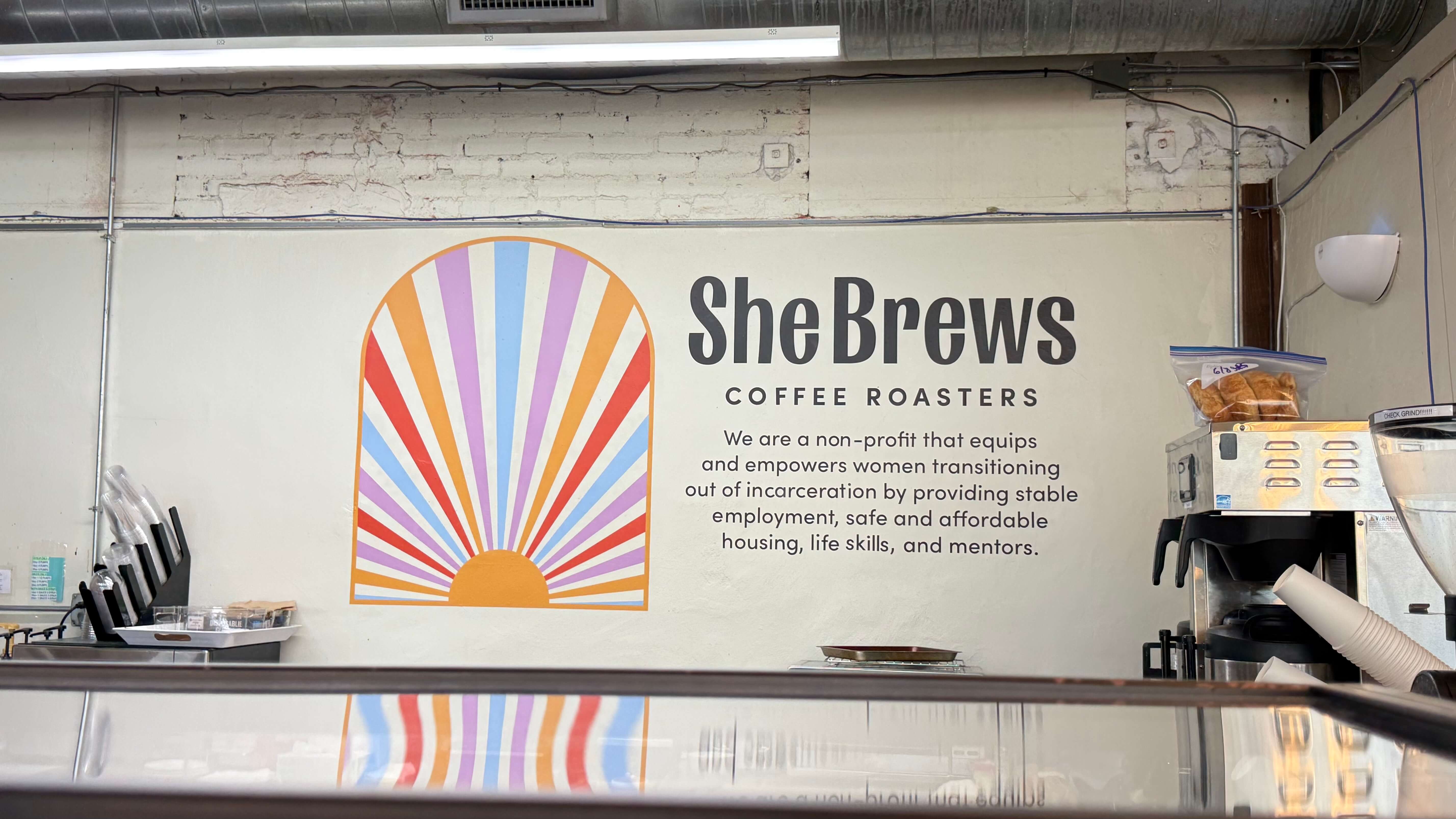
After the market, make your way to She Brews Coffee Roasters on North Lewis Avenue. On the surface it’s a very good cup of coffee — and it genuinely is. But She Brews is also one of those places that stays with you long after you’ve left. It’s a nonprofit roastery founded by Rhonda Bear, a formerly incarcerated woman who built the business specifically to create employment, housing, and second chances for women coming out of the prison system. Every coffee you buy goes directly towards that mission. The staff are warm, the space is welcoming, and knowing the story behind it makes the whole experience feel quite meaningful. It’s the kind of place that reminds you why supporting small, independent businesses actually matters.
Head to the Factory Outlets
If you’re after discounted brand shopping, the Tulsa Premium Outlets in nearby Broken Arrow are worth the short drive. You’ll find the usual mix of well-known brands at outlet prices — think Coach, Kate Spade, Tommy Hilfiger, Nike, and more. It’s a comfortable, well-laid-out centre and a good way to spend a few hours if you’re travelling with people whose enthusiasm for history and art museums has a finite limit.
Browse the Route 66 Antique Shops
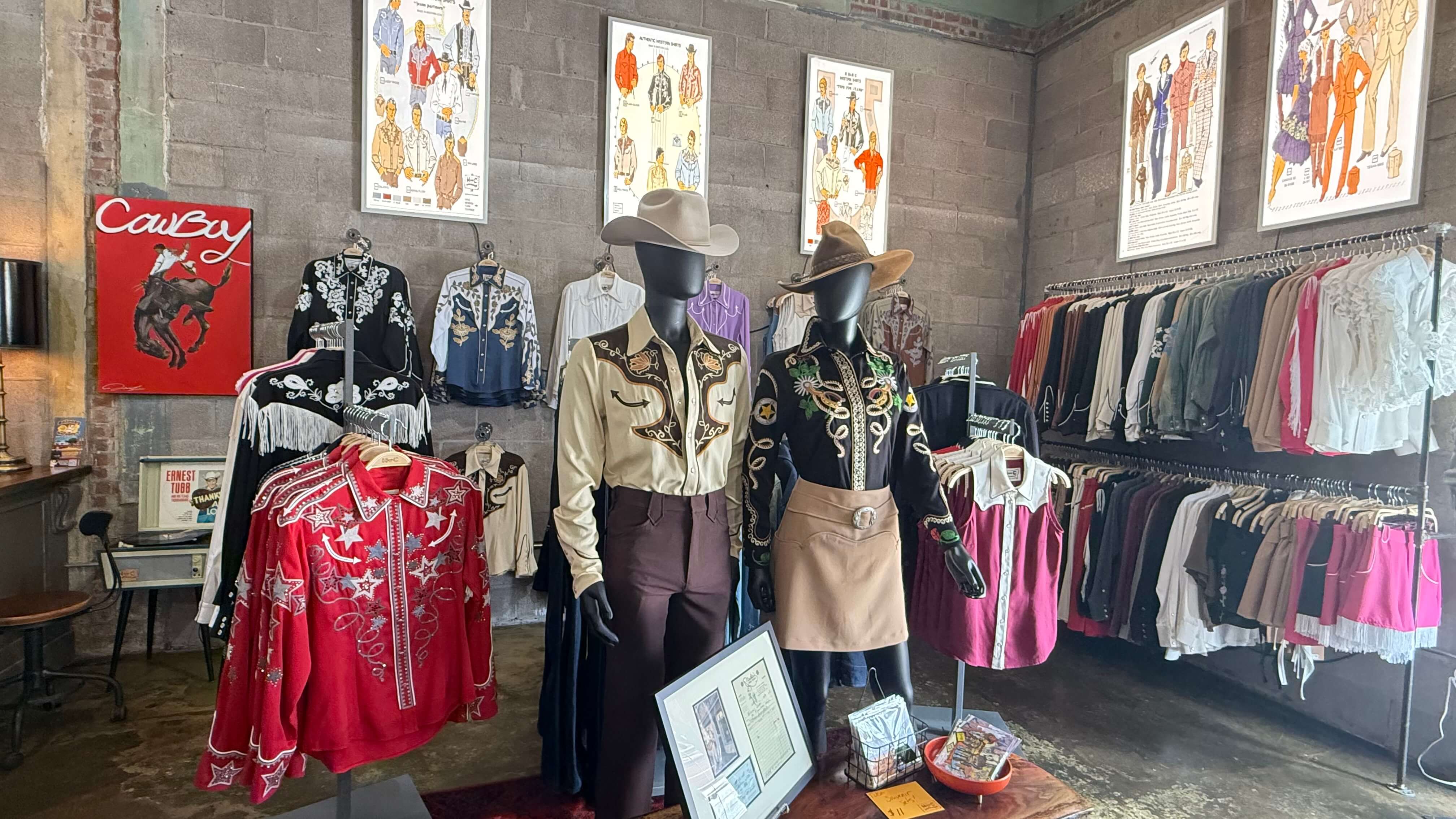
As you travel the Route 66 corridor through Tulsa and out towards the edges of the city, keep an eye out for the antique shops and vintage stores that line the road. There are some genuinely good finds — old Americana, Route 66 memorabilia, oil-boom-era collectables, and plenty of curiosities that make for good conversation pieces. It’s very much a browse-and-see situation, which is exactly how it should be.
Eat at the Mother Road Market
The Mother Road Market is one of Tulsa’s best food hall discoveries. Named for Route 66 itself — John Steinbeck’s “mother road” — it’s a lively indoor market on Peoria Avenue packed with local vendors, small food businesses, and a great atmosphere. It’s the kind of place you wander into for a quick bite and end up staying for two hours. The variety is excellent: everything from tacos and Korean food to charcuterie and artisan coffee. Go hungry, go with an open mind, and let the locals show you what Tulsa is eating right now.
Stop at the Visitors Centre — and Ride the Musical Bikes
Before you drive the musical road, stop into the Tulsa Route 66 Visitors Centre on Cyrus Avery Plaza. It’s a great starting point for understanding the road’s history and picking up a map. But the real surprise is out front: a set of stationary bikes with piano keys attached — pedal them and they play music. Brilliantly quirky, and completely free. Kids and adults alike love them.
Drive the Route 66 Musical Road — and Celebrate 100 Years
This one is brand new and completely unmissable in 2026. Tulsa has just installed Oklahoma’s first musical road on a stretch of Route 66 — grooves cut into the pavement that play Woody Guthrie’s This Land Is Your Land as you drive over them. Drive it slowly, windows down, and it genuinely gives you goosebumps.
And this year makes it even more special — Route 66 turns 100 in 2026, and Tulsa is at the heart of the centennial celebrations. Events are running throughout the year at the Gathering Place and across the city. If you have any interest in the road, this is the year to do it.
Worth the Drive: A Day Trip to Woolaroc Ranch
About an hour north of Tulsa — passing through the small town of Barnsdall — lies one of Oklahoma’s most unexpected and rewarding day trips. Woolaroc Ranch is the former estate of Frank Phillips, the oil tycoon who founded Phillips Petroleum and one of the most influential figures of the Oklahoma oil boom. He built this 3,700-acre retreat in the 1920s and named it after the woods, lakes, and rocks on the property.
Today it’s open to visitors, and it’s quite something. Drive through the wildlife preserve and you’ll find a herd of American bison roaming freely across the land — along with longhorn cattle, elk, and deer. It’s a genuinely special sight, particularly in the early morning when the mist is still sitting on the grassland.
The museum on the estate is equally impressive. It holds one of the finest collections of Native American art and artefacts in the American Southwest, alongside Western paintings, Frank Phillips’ personal memorabilia, and exhibits that tell the fascinating story of how oil transformed Oklahoma almost overnight. Allow a full day — it rewards the time.
Practical Planning: A Few Things Worth Knowing
When to go
Spring (April–May) and autumn (September–October) are ideal — mild temperatures, green landscapes, and major events on the calendar. Tulsa summers are genuinely hot (mid-30s°C is common), so plan outdoor time accordingly.
How many days do you need?
Two full days covers the highlights comfortably. Three days lets you breathe, explore the food scene properly, and take a day trip out on Route 66.
Getting around
Tulsa is a driving city. Public transport exists but is limited, so hiring a car gives you the most flexibility. The Gathering Place, Gilcrease, and Philbrook are all easily reachable by car within 15 minutes of downtown.
Frequently Asked Questions About Tulsa
Is Tulsa safe for tourists?
Tulsa is generally safe for visitors who stick to the tourist areas — downtown, the Arts District, Midtown, and the Gathering Place. Like any mid-sized American city, some neighbourhoods are best avoided at night. The city has invested heavily in its downtown and the experience for visitors in these areas is relaxed and welcoming. Use common sense and you’ll be absolutely fine.
Is Tulsa a good city break from Dallas or Oklahoma City?
It’s excellent. Tulsa is roughly 1 hour 45 minutes from Oklahoma City and about 5 hours from Dallas by car. It makes a very satisfying long weekend — the kind where you come back feeling like you’ve genuinely discovered something. The Gathering Place alone is worth making a trip for.
What is Tulsa best known for, historically speaking?
Three things define Tulsa’s history: oil, music, and a tragic chapter many Americans are only now learning about. The oil boom of the 1910s–30s built the city’s wealth and its extraordinary Art Deco skyline. Tulsa produced Woody Guthrie and has deep roots in the American folk and country tradition. And the Greenwood District’s Black Wall Street — and its destruction in the 1921 Race Massacre — is a story of resilience and injustice that every visitor should take time to understand.
Tulsa genuinely rewards curiosity. It’s the kind of city that doesn’t try to sell itself to you — it just quietly gets on with being rather brilliant. Go with an open mind and a comfortable pair of shoes, and it’ll win you over.
Thanks so much for reading this article. I hope it helps you plan a wonderful visit to Tulsa. As always, my aim is to give you the kind of honest, practical advice I’d give to a friend — none of the fluff, all of the good stuff.
📸 Follow along on Instagram where I share real-time travel updates, behind-the-scenes moments and travel tips and recommendations.
Instagram @trulyexpattravel →
💬 Join the Truly Expat Facebook community — a supportive space for travellers to ask questions, share tips, and connect before trips.
Facebook Community →
Running this blog takes a lot of coffee (and countless hours exploring every destination!). If you found this helpful and want to support more honest, detailed travel guides and itineraries, you can buy me a coffee. No pressure though — I’m just happy you’re here and hope you have an incredible adventure! 🙂
Affiliate Disclosure: This post contains affiliate links. If you book through them, I may earn a small commission at no extra cost to you — this helps me keep creating free, detailed travel guides. I only recommend services and products I genuinely use and trust after years of travel across Asia and beyond.
Latest Posts
- The Best Things to Do in Tulsa, Oklahoma (And Why It’ll Surprise You)
- Stop Paying Roaming Fees: Why eSIMo Is the Travel eSIM I’ve Been Waiting For
- Retirement Travel Gets Better When You Stop Trying to See Everything
- Why Control Over Your Time May Be Travel’s Most Meaningful Luxury
- Buyan Lakeside Villas: The Cooler, Quieter Side of Bali Nobody Told You About