

Ho Chi Minh City (still widely called Saigon) delivers exactly what you’d expect from Vietnam’s largest city—chaotic traffic that somehow works, excellent street food, sobering war history, and that frenetic energy that either overwhelms or thrills depending on your disposition.
Table of Contents
After multiple visits over the years, I’ve learned that the War Remnants Museum genuinely affects everyone regardless of political views, the Cu Chi Tunnels work better as a half-day than squeezed into combined tours, and yes, you need to dedicate proper time to crossing roads—it’s genuinely terrifying initially, then becomes oddly meditative.
What makes HCMC worthwhile despite not being classically beautiful is the combination—significant war history sites within easy reach, phenomenal food scene (Vietnamese coffee culture alone justifies the trip), French colonial architecture, and that authentic Vietnamese urban experience. It’s considerably less polished than Bangkok or Singapore, which is rather the point.
The Best Things to Do in Ho Chi Minh
The Essential War History Sites
War Remnants Museum (Emotionally Heavy but Essential)
Located in District 3 at the corner of Vo Van Tan and Le Quy Don streets, this museum presents the Vietnam War (referred to here as the American War) from the Vietnamese perspective. It’s graphic, confronting, and unapologetically one-sided—which American visitors can find jarring.
What to expect
Three floors of exhibits featuring disturbing photographs (Agent Orange victims, war atrocities, civilian casualties), military equipment in the courtyard (tanks, helicopters, fighter jets), and the exceptional Requiem Gallery showcasing work by war photographers (many of whom died covering the conflict).
The imagery is genuinely difficult—deformed children from chemical warfare, execution photos, civilian suffering documented in stark detail. It’s propaganda, yes, but it’s also historical documentation from the losing side’s archives (many photos come from American sources).
Practical details
- Adults: 40,000 VND (about S$2)
- Children 6-15: 15,000 VND
- Under 6: Free
- Open daily: 7:30am-12pm, 1:30-5pm
- Plan 1.5-2 hours minimum
The museum is walkable from District 1 hotels (10-15 minutes from Notre Dame Cathedral), or Grab taxis cost under 50,000 VND from central locations.
Solo travellers will find this straightforward to navigate alone—it’s self-guided, well-signposted in English, and always busy so you’re never isolated.
Cu Chi Tunnels (The Underground Network)
About 70 kilometres northwest of HCMC (1.5-2 hours depending on traffic), the Cu Chi Tunnels formed part of the vast underground network used by Viet Cong fighters. At one point, over 200 kilometres of tunnels connected villages, provided shelter, stored supplies, and enabled guerrilla warfare tactics.
The experience
Watch an introductory video (propaganda-heavy but informative), explore widened sections of tunnels (original tunnels were considerably smaller—these have been enlarged for tourist access), see hidden entrances, visit underground command posts and hospitals, and try the tapioca and tea that sustained fighters.
The tunnel crawl
You can attempt crawling through sections ranging from 20-100 metres. The tunnels are dark, humid, claustrophobic, and genuinely uncomfortable. Most people exit at the first available point (20-40 metres)—it’s genuinely unimaginable that people lived and fought from these spaces for months.
Shooting range
For additional cost, you can fire AK-47s and other weapons. It’s touristy but popular. Bullets cost extra (around 40,000 VND per bullet).
Tour vs independent
Tours handle logistics (transport, entrance, guide) and cost around S$30-40. Going independently requires hiring car/motorbike and navigating yourself—doable but tour convenience usually justifies the modest cost.
Combined vs separate
Most tours combine War Remnants Museum and Cu Chi Tunnels in one exhausting 12-hour day. If time permits, do them separately—you’ll absorb more and arrive home less drained. The museum deserves at least 2 hours, which combined tours don’t provide.
French Colonial Architecture
Notre Dame Cathedral
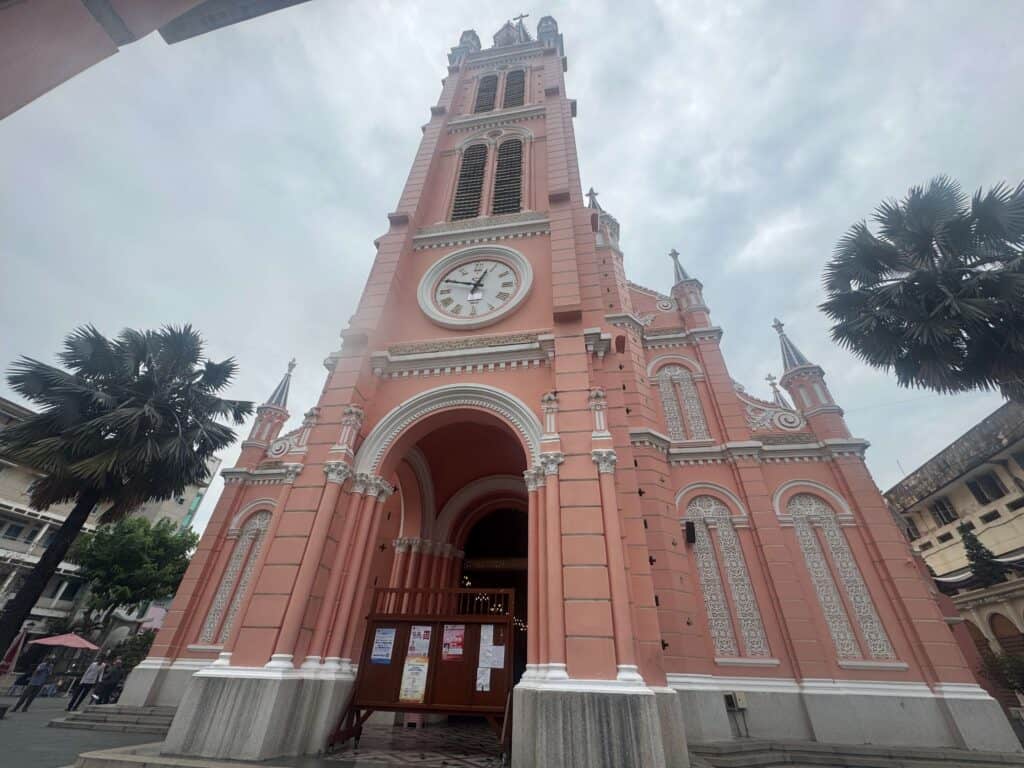
The iconic pink-red brick cathedral (officially Saigon Notre-Dame Cathedral Basilica) sits in District 1’s heart. Built 1863-1880 with materials imported from France, it’s currently undergoing restoration—you can only view from outside, but the neo-Romanesque façade photographs beautifully.

Saigon Central Post Office
Right next to Notre Dame, this stunning French colonial building (designed by Gustave Eiffel’s company, 1886-1891) still functions as a working post office. The interior features gorgeous arched windows, painted ceiling, old-fashioned phone booths, and a massive portrait of Ho Chi Minh.
Buy postcards, mail letters home (genuinely lovely souvenir), or simply admire the architecture. It’s free to enter and considerably more interesting than most post offices.

Reunification Palace (Independence Palace)
The presidential palace during the South Vietnam government, this modernist building became famous when North Vietnamese tanks crashed through its gates on April 30, 1975, marking the war’s end and Vietnam’s reunification.
The interior remains largely as it was—1960s-70s furnishings, war command rooms, bunkers, vintage communications equipment, and that preserved-in-time quality. The rooftop helipad offers city views.
- Entrance: 65,000 VND
- Hours: 7:30-11am, 1-4pm daily
It’s considerably more interesting than it sounds—the historical significance and preserved state create genuine atmosphere.
Food & Coffee Culture
Vietnamese Coffee
HCMC takes coffee seriously. The traditional style—dark-roast robusta coffee dripped through a phin filter into condensed milk—creates strong, sweet, intensely caffeinated result.
Where to try:
- The Workshop (multiple locations) – Specialty coffee roasters with excellent single-origin options
- Cong Caphe – Popular chain with vintage propaganda aesthetic
- Street vendors – Tiny plastic stools, strong ca phe sua da, authentic atmosphere
Street Food
HCMC’s street food scene is phenomenal. Pho, banh mi, bun cha, goi cuon (fresh spring rolls), com tam (broken rice), and banh xeo (Vietnamese crepes) are all excellent here.
Food tours take you to spots you’d never find alone, explain what you’re eating, and navigate language barriers. Well worth the investment. Ben Thanh Market offers food stalls, though it’s touristy. The surrounding streets have better, cheaper options.

Other Attractions
- Bitexco Financial Tower – Saigon Skydeck on 49th floor offers 360-degree city views
- Ho Chi Minh City Museum of Fine Arts – Vietnamese art from ancient to contemporary periods
- Jade Emperor Pagoda – Atmospheric Chinese-style Buddhist temple with intricate carvings
- Binh Tay Market (Cholon/Chinatown) – Massive wholesale market, authentically localSaigon Opera House – French colonial architecture, hosts performances

Practical Information
Getting There
Multiple airlines serve Tan Son Nhat International Airport from Singapore, regional hubs, and international destinations.
Getting Around
- Grab works reliably and is affordable
- Walking suits District 1 exploring (watch for motorbikes constantly)
- Cyclo tours for tourist areas (negotiate prices first)
- Car hire makes sense only if leaving the city
Crossing Roads
Walk at steady, predictable pace. Don’t stop suddenly, don’t run, don’t wait for gaps (there aren’t any). Motorbikes will flow around you. It’s terrifying initially, then becomes routine.
Best Time to Visit
December-April (dry season). May-November brings heavy rain (though it typically rains hard for short periods rather than all day).
How Long
2-3 days covers highlights comfortably. Add more time for Mekong Delta day trips or deeper exploration.
Where to Stay
District 1 for central location near attractions, restaurants, nightlife. District 3 for slightly quieter atmosphere still close to museums. District 2 (Thao Dien) for expat cafes and international dining.
Visa
Check Vietnam visa requirements for your nationality.
Insurance
Travel insurance covers medical emergencies and trip issues.
Frequently Asked Questions

Conclusion
Ho Chi Minh City delivers intense urban Vietnam—chaotic, fascinating, historically significant, and relentlessly energetic. The war history sites provide sobering context, the French colonial architecture offers beauty, and the food scene alone justifies the trip. It’s not classically beautiful or relaxing, but it’s genuinely engaging.
If you want beach holidays and tranquil temples, head elsewhere. If you want to understand modern Vietnam, experience authentic urban Southeast Asia, and eat phenomenally well, HCMC delivers.
Follow along on Instagram @trulyexpattravel where I share real-time travel updates, behind-the-scenes moments from tours, and daily life in Singapore.
Join the Truly Expat Facebook community here—a supportive space for women travellers to ask questions, share tips, and connect before trips.
Affiliate Disclosure: This post contains affiliate links. If you book through them, I may earn a small commission at no extra cost to you—this helps me keep creating free, detailed travel guides. I only recommend services and products I genuinely use and trust after years of travel across Asia.
Pin it for later