Fifteen minutes. That’s how long it took to get from Kowloon to the heart of Shenzhen on my first ever Chinese high-speed train. I’ve been hopping across this border on and off for years, yet this weekend still managed to surprise me. Drones flying lunch across the skyline, a robot bringing snacks to my hotel room, and not a single credit card in sight.
If you’re thinking about a weekend in Shenzhen, these are the Shenzhen travel tips I’d give a friend before they go. And if you’re visiting Hong Kong first, start with my guide to the best things to do in Hong Kong for first timers, then add Shenzhen on as an easy side trip.
Table of Contents
How to Get to Shenzhen by High-Speed Train
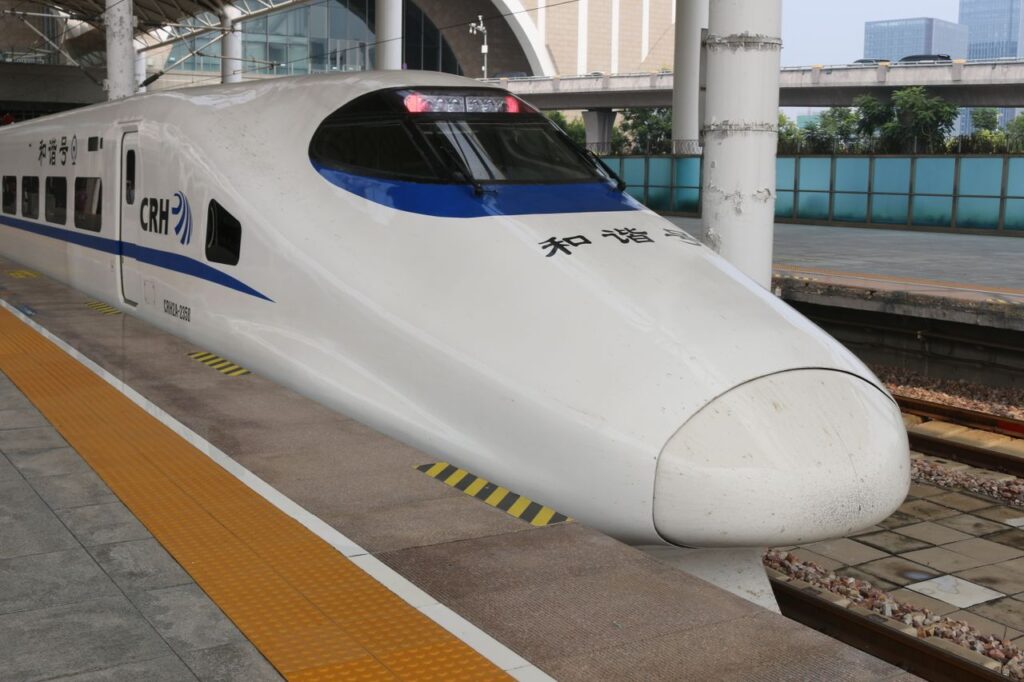
The easiest way from Hong Kong is the high-speed rail from Hong Kong West Kowloon Station to Futian Station, right in Shenzhen’s central business district. The fastest trains take around 14–15 minutes, and services run frequently from early morning until late evening.
What I loved most is that you clear both Hong Kong departure and mainland China arrival immigration inside West Kowloon Station. So once you step off the train in Futian, you simply walk out into the city. No queues at a land border, no dragging bags between checkpoints.
Tips for booking:
- Book through the MTR High Speed Rail website or app, or a platform like Trip.com.
- Use your passport name exactly as printed – your passport is your ticket.
- Arrive at least 45 minutes early, especially on Friday evenings and public holidays.
- Futian is ideal for the CBD and Futian hotels. Some trains go to Shenzhen North instead, which is further out, so check your arrival station.
Coming back on a Sunday evening? West Kowloon sits right by the harbour, so you can roll straight off the train and into an evening out. My guide to the best things to do in Hong Kong at night has plenty of ideas.
Three Classes on the Train (and Why First Class Is Worth It)
There are three styles of travel on most trains between Hong Kong and Shenzhen:
| Class | Approx. one-way fare to Futian | What you get |
|---|---|---|
| Second Class | ~RMB 68–75 | Standard reclining seats, five across |
| First Class | ~RMB 109–120 | Wider seats, four across, more legroom, a calmer carriage |
| Business Class | ~RMB 204–226 | Large lie-flat style seats in a small private section |
Fares are approximate and change seasonally; tickets bought in Hong Kong are priced in HKD.
We went first class, and honestly, it was definitely worth the money. For a few dollars more you get a quieter carriage, a proper seat and room for your bag at your feet. When the whole journey costs less than a cocktail in Hong Kong, it’s an easy upgrade.
Visas and Entry: What Australians Need to Know
Here’s the good news for Aussies: Australians can currently enter mainland China visa-free for up to 30 days for tourism, business or visiting family. The scheme has been extended until 31 December 2026, so if you’re planning for 2027, check the latest update before you book.
Visa-free doesn’t mean paperwork-free, though. Since November 2025, foreign visitors fill in the China arrival card online before travel. You can do it on the National Immigration Administration website, or through the NIA 12367 mini-program inside Alipay or WeChat. It takes about five minutes and it’s free – ignore any lookalike website asking you to pay.
Other passports have different rules, so always check your own eligibility before you travel.
Set Up Alipay or WeChat Pay Before You Arrive
This is the big one. Shenzhen is almost entirely cashless – and I mean no credit cards either. Restaurants, taxis, convenience stores, even the smallest noodle stalls run on Alipay or WeChat Pay. That’s it.
So set it up before you cross the border:
- Download Alipay and/or WeChat on your phone at home.
- Verify your account with your passport.
- Link your Visa or Mastercard inside the app.
- Make a small test payment so you know it works.
It’s also worth downloading a VPN-free maps app like Amap, plus a translation app. Google services don’t work in mainland China, so organise this before you leave too.

Where I Stayed: Sheraton Shenzhen Futian
We stayed at the Sheraton Shenzhen Futian, and the location couldn’t be better for a short trip. It sits in the Futian CBD at Great China International Exchange Square, just a short walk from Futian high-speed rail station and right by Convention & Exhibition Center metro station. You can be off the train and checking in within minutes.
And the highlight? Robots deliver to your room. Order something to the room, and a little robot glides along the corridor, calls your phone and pops open its lid. It never stopped being fun.
Drones Deliver Fast Food
Look up in Shenzhen and you may well see your neighbour’s lunch flying past. Delivery platform Meituan runs drone routes across the city. Food is collected from mall restaurants, carried to a rooftop launch pad and flown to pick-up kiosks, often in well under 15 minutes. Shenzhen has been at the forefront of drone delivery for years, and it really does feel like stepping into the future.
Mega Malls and Heaving Food Courts
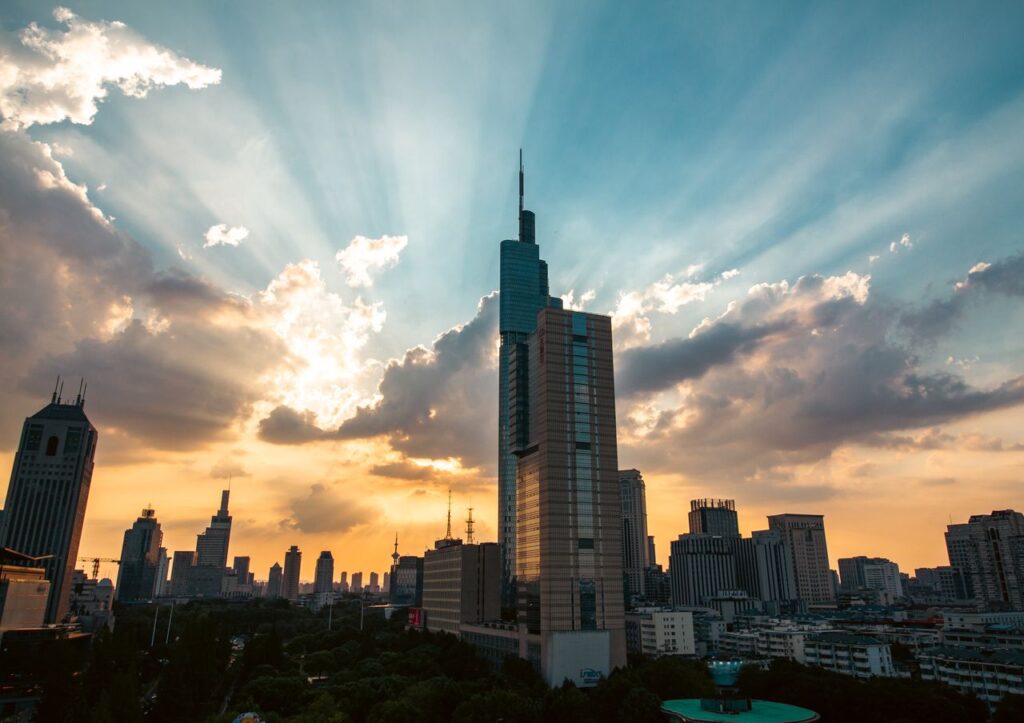
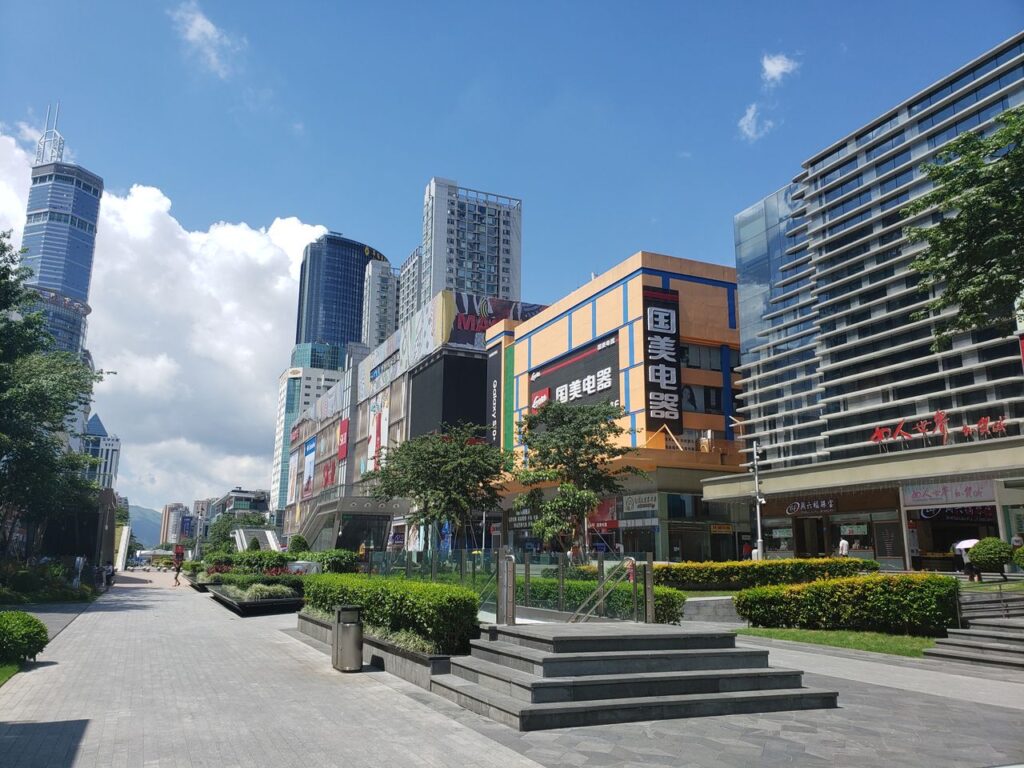
Shenzhen does malls on a mega scale – sleek, enormous and beautifully lit. What surprised me was how quiet the shops were. We wandered past designer stores with barely a soul inside.
Then we went down to the food courts, and they were absolutely heaving. Everyone, it seems, comes to eat. So if you only do one thing in a Shenzhen mall, make it lunch. Point, scan, pay with your phone, and enjoy.
Back to My Old Stomping Ground: Lo Wu
No trip to Shenzhen is complete for me without a visit to Lo Wu (Luohu), my old stomping ground. Where we would visit on a day trip from Hong Kong, loads to find here, from tailors to massages and absolutely EVERYTHING in between. You wont find branded boutiques here, you will find everything from scarves to electronics with hundreds of vendors (think indoor night markets).
Lo Wu sits right on the border with Hong Kong and is easy to reach from Futian by metro or taxi. It’s grittier and more old-school than shiny Futian, which is exactly why I love it.
Lo Wu and Lantau are the two places that feel most like home to me in this part of the world. If you’ve got an extra day on the Hong Kong side, my Lantau Island must-dos will show you why. You can also hear more about my years living here in my Truly Expat Travel episode, Why Hong Kong Is Still Worth Visiting in 2026.
Shenzhen Travel Tips FAQ
How long is the train from Hong Kong to Shenzhen? The fastest high-speed trains from West Kowloon to Futian take around 14–15 minutes.
Do Australians need a visa for Shenzhen? Not currently. Australians can visit mainland China visa-free for up to 30 days until 31 December 2026. You still need to complete the free online arrival card.
Can I use my credit card in Shenzhen? Generally, no. Almost everywhere uses Alipay or WeChat Pay. Link your card to one of these apps before you arrive.
Is first class on the high-speed train worth it? For such a short trip, the upgrade costs very little. We found the extra space and quieter carriage well worth it.
Where should I stay in Shenzhen for a weekend? Futian is ideal. It’s the CBD, it has its own high-speed rail station, and it’s well connected by metro.
Plan Your Shenzhen Trip
- Trains: Book with Trip.com here.
- Hotels: Although there are many to choose from, we stayed at the Sheraton Futian
- Tours and experiences: Shenzhen Tech tour or Journey Through Time in Shenzhen: Old Town to Smart City
Loved this guide? Follow along on Instagram and Facebook, and listen to more stories on Truly Expat Travel.
This post may contain affiliate links, meaning we may receive a commission at no extra cost if you purchase through a link. Please see our full disclosure for further information.
Latest Articles
- Biteseeing in Taipei: Dumplings, Dried Tofu and a Very Good Cup of Tea
- Shenzhen Travel Tips: What You Need to Know Before a your Trip from Hong Kong
- The 7-Day Bali Itinerary for Backpackers
- Vico Equense Travel Guide: The Quieter Base for Sorrento, Capri and the Amalfi Coast
- Morocco Beyond the Tourist Trail: A Guide to Culture, Landscapes and Local Experiences