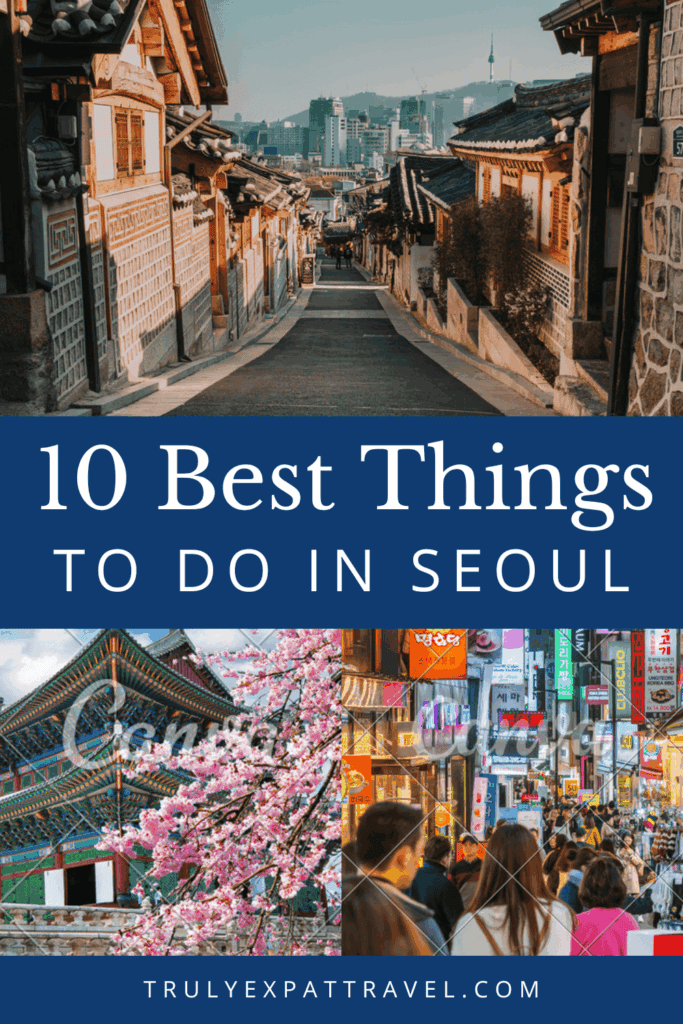
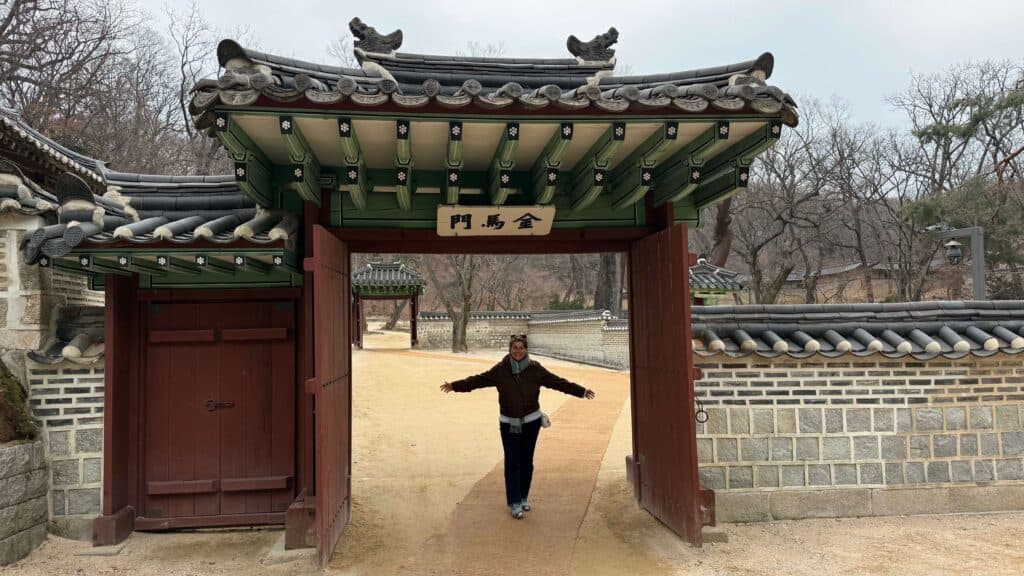
Seoul completely surprised me. I’d heard it had changed a lot since I lived there, becoming efficient, modern and clean — and it is all of those things — but what nobody told me was how alive it feels.
Table of Contents
The food markets buzz at midnight, the palace grounds are genuinely breathtaking, and the K-beauty shops will have you reconsidering your entire skincare routine.
Whether you have five days or ten, Seoul rewards every hour you give it. If you’re planning a trip, I’ve put together a complete 5-day Seoul itinerary covering everything from the DMZ to the best neighbourhoods, where to eat and where to stay. Here’s exactly what I’d tell a friend heading there for the first time.
Getting there: Flying into Incheon? Book your airport transfer in advance — it’s a long way from the city. Compare transfer and car hire options here (airport transfer and Rental Cars ) save yourself the taxi queue stress on arrival. If you are travelling solo and on a budget, the bus is easy to use and an affordable option. Purchase a ticket inside the terminal and they will advise you of the bus stand you need to wait at.
1. Wander Gyeongbokgung Palace — and Do It at Opening Time
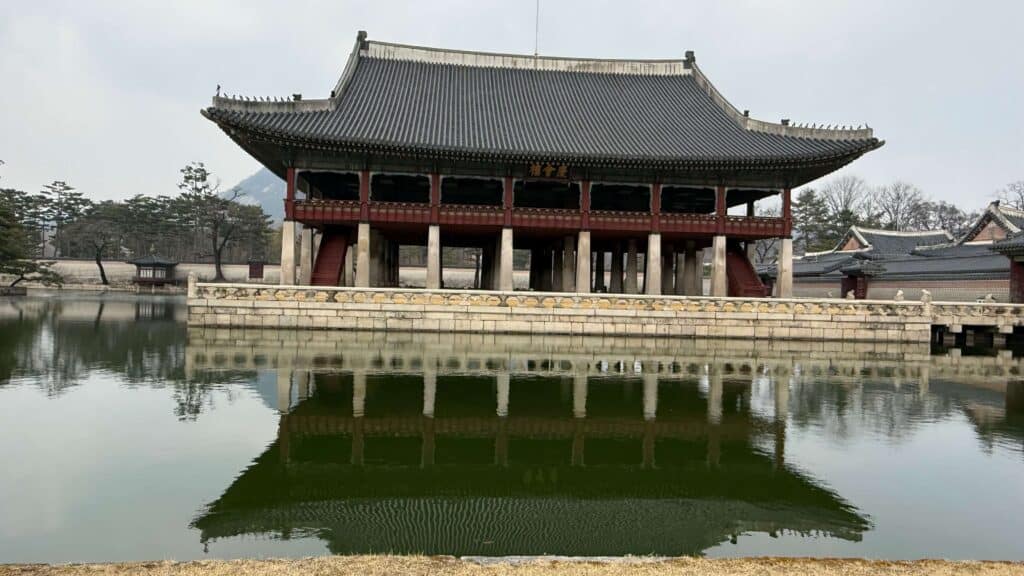
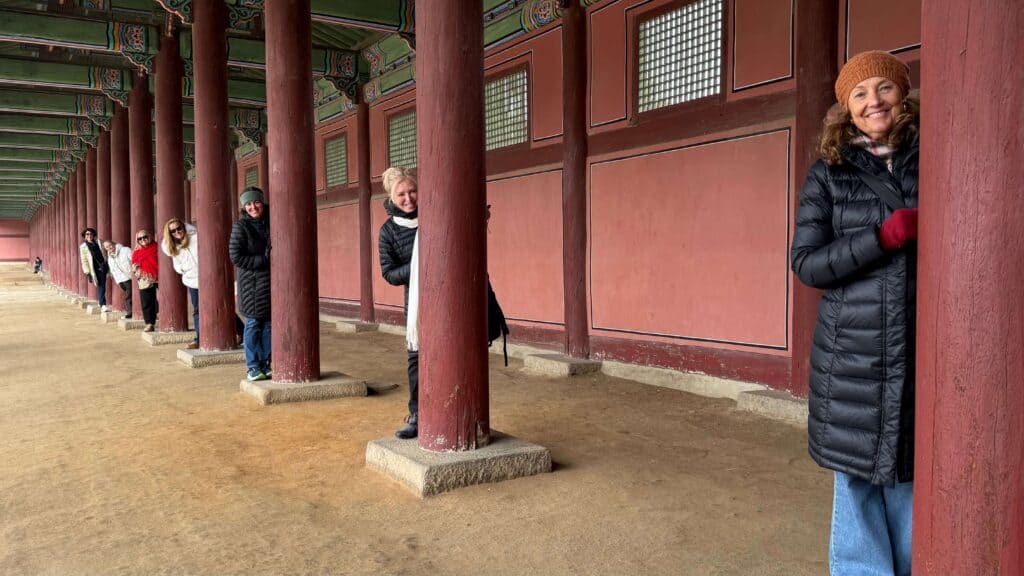
This is Seoul’s most iconic palace and it genuinely earns its reputation. Go at 9am when the gates open — before the tour groups arrive — and you’ll have the courtyards almost to yourself. The changing of the guard ceremony runs at 10am and noon and is worth timing your visit around.
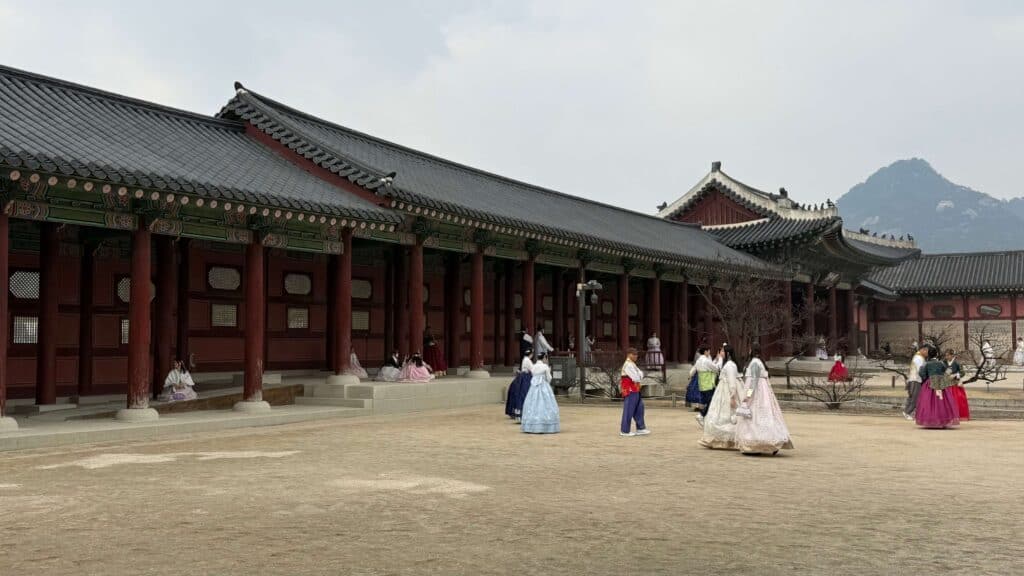
Tip: Wear a hanbok (traditional Korean dress) inside the palace grounds and entry is free. You can hire one from the many rental shops just outside the main gate.
Book a guided Gyeongbokgung Palace tour here — a guide makes the history come alive in a way a self-guided visit simply doesn’t
2. Lose Yourself in Namdaemun Market — Seoul’s Oldest and Biggest
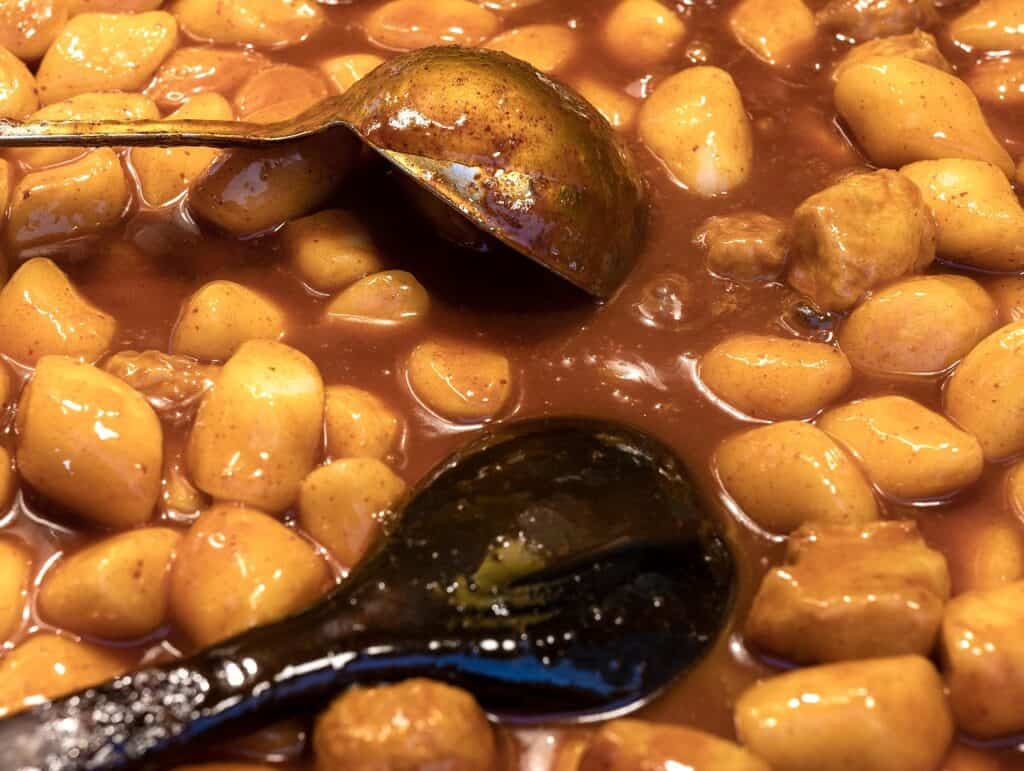
Namdaemun Market has been trading for over 600 years and it shows — in the best possible way. This is Seoul’s largest traditional market and it’s the kind of place where you could wander for hours and still not see everything. Clothing, street food, kitchenware, accessories, dried goods, fresh produce — it’s all here, stacked high and spilling out onto every pavement.
The food stalls are the real draw. Look for hotteok (sweet syrup-filled pancakes, absolutely unmissable in cooler weather), kalguksu (handmade knife-cut noodle soup) and galchi jorim (braised hairtail fish if you’re feeling adventurous). Eat standing up, eat often, and don’t overthink it.
Tip: Bargaining is expected and part of the experience — start at around 30% below the asking price and meet in the middle. Cash is king here.
3. Explore Bukchon Hanok Village — Seoul’s Most Photogenic Neighbourhood
Tucked between Gyeongbokgung and Changdeokgung palaces, Bukchon is a neighbourhood of beautifully preserved traditional Korean houses (hanok). The narrow lanes, tiled rooftops and wooden doorways feel like a different century — especially in the early morning before the day-trippers arrive. Better still stay the night at one of the many Bukchon guest houses
It’s a residential area so please be respectful of noise — signs remind you to walk quietly, and they mean it. If you want to know more about the village then visit with a guide that will also include a Korean tea ceremony.
4. Shop K-Beauty in Myeongdong — This is the One You’ve Been Waiting For
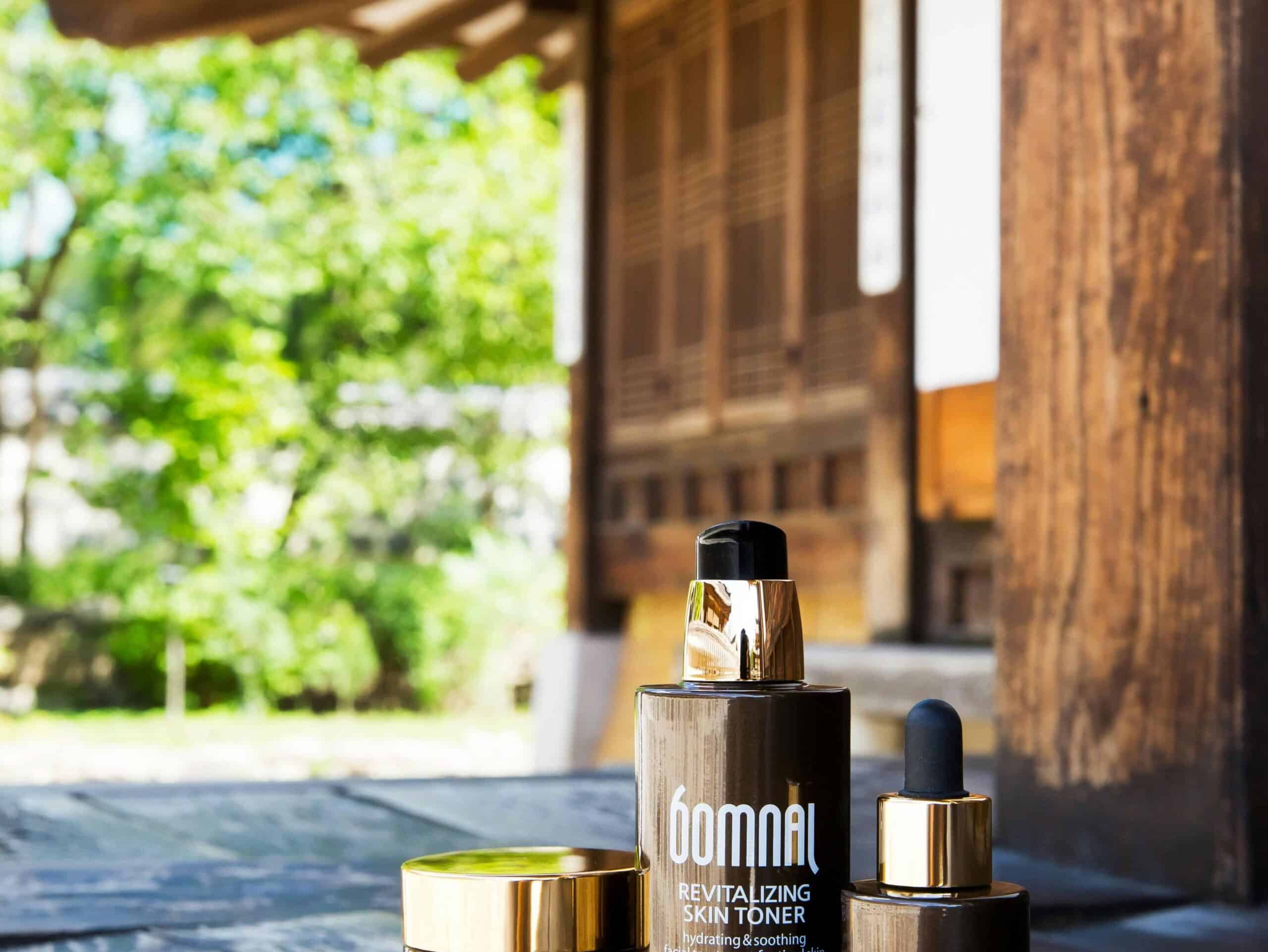
Right, let’s talk about the real reason half of us wanted to come to Seoul. Myeongdong is ground zero for K-beauty and you will not leave empty-handed. The main shopping street is lined with flagship stores for brands you already know — Innisfree, Etude House, Laneige, Cosrx — plus hundreds of smaller shops selling sheet masks, serums and sunscreens at prices that will make your eyes water (in a good way).
What to buy: Snail cream, vitamin C serums, SPF sticks, cushion foundations, and enough sheet masks to last six months. The staff at most shops will do skin consultations and let you try everything before you buy — take full advantage.
Bring an extra tote bag. You will need it. Many shops give free gifts with purchases — the more you buy, the more samples you get. Olive Young is truly the winner though, shops are EVERYWHERE! The best part is that you can get your tax refund there on the spot, so bring your passport.
5. Explore Gangnam — Yes, It’s Real and Yes, It’s Worth It
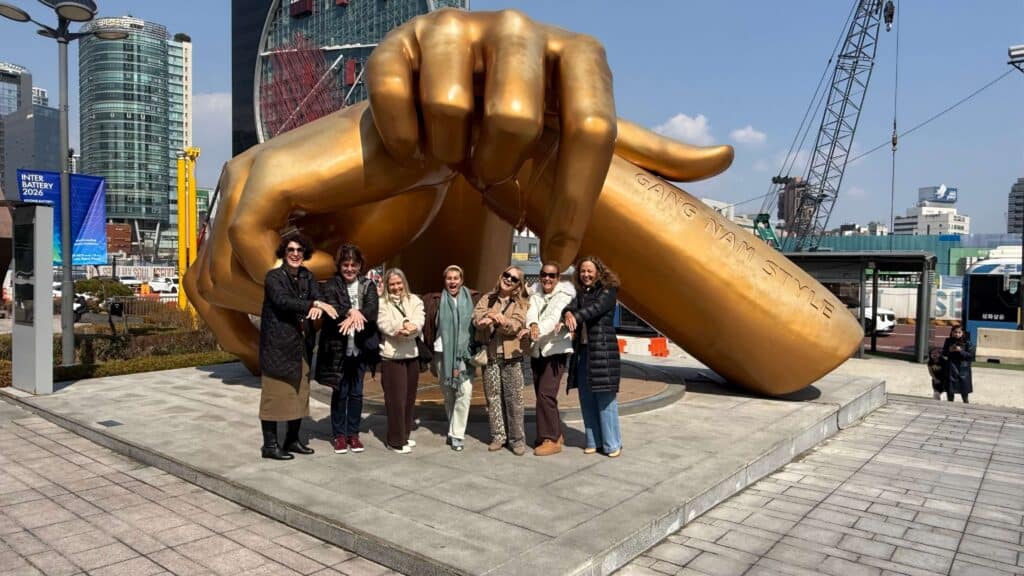
You already know the name. But Gangnam is far more than a catchy song — it’s Seoul’s most affluent district and one of the most fascinating contrasts the city has to offer. Wide, tree-lined boulevards, luxury flagship stores, sleek rooftop restaurants and a neighbourhood energy that feels noticeably different from the older parts of the city.
The main strip along Gangnam-daero is where the high-end shopping happens — think Korean designer brands, international flagships and the kind of beauty clinics that people fly to Seoul specifically to visit. Apgujeong Rodeo Street nearby is where Korean celebrities shop and where the K-beauty innovation is at its most cutting edge — newer, harder-to-find brands that haven’t made it to Myeongdong yet.
Don’t skip COEX Mall either — it’s one of the largest underground shopping centres in Asia and home to the stunning Starfield Library, a floor-to-ceiling bookshelf installation that’s become one of Seoul’s most photographed spots.
Tip: Gangnam is best explored in the afternoon and evening when the restaurants and bars are in full swing. It’s a completely different Seoul to the palace district — and seeing both in the same trip is exactly the point.
6. Visit Insadong for Galleries, Tea Houses and Proper Souvenirs
If Myeongdong is Seoul’s commercial heart, Insadong is its creative soul. This neighbourhood is full of independent galleries, traditional tea houses, antique shops and craft stores selling things you’ll actually want to display at home. The main street leads into Ssamziegil — a quirky courtyard shopping complex built around a spiralling walkway that’s far more interesting than any mall.
What to buy here: Hanji (traditional Korean paper) products, celadon ceramics, handmade jewellery, and quality tea sets. A proper Korean celadon teapot is the souvenir I’d recommend over anything else.
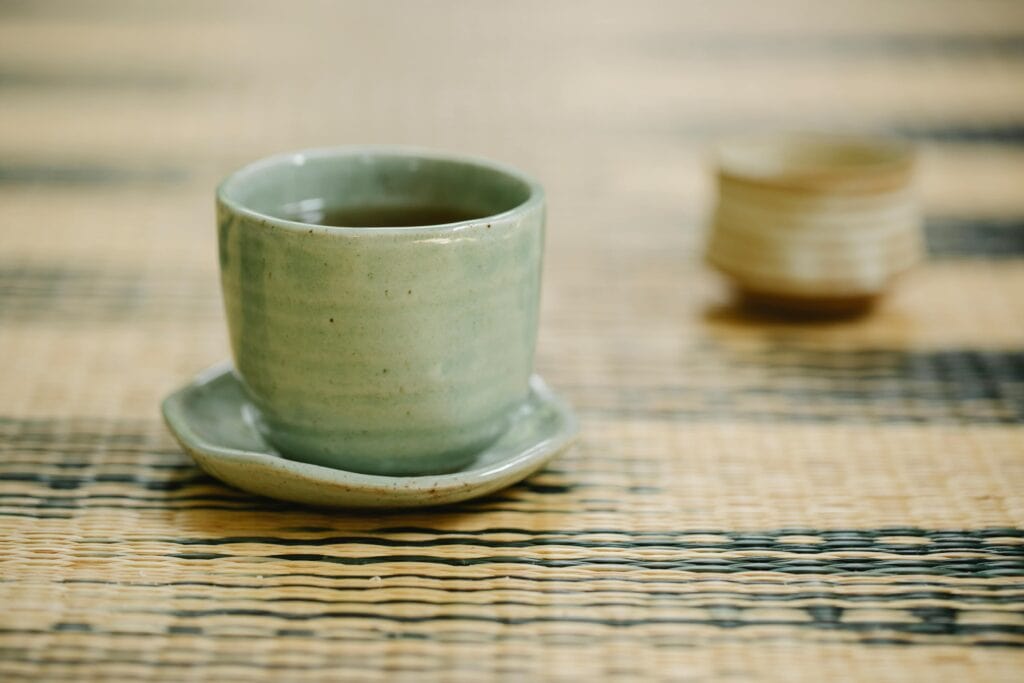
7. Spend an Evening in Hongdae — Seoul’s Creative Youth Quarter
Hongdae is the neighbourhood around Hongik University and it has a completely different energy to the rest of Seoul. Street performers, live music spilling out of tiny venues, independent fashion boutiques, neon-lit photo booths and more late-night eats than you could manage in a week. Go in the evening — the neighbourhood transforms after dark.
This is also one of the best areas for vintage and independent fashion shopping if the K-beauty haul isn’t enough for your suitcase.
8. Visit Jogyesa Temple — Seoul’s Most Important Buddhist Shrin
Right in the middle of the city, tucked behind a busy street in Jongno, Jogyesa Temple is the head temple of Korean Buddhism and one of the most peaceful places in Seoul. The contrast hits you the moment you step through the gate — the noise of the city drops away and you’re surrounded by ancient trees, lanterns and the quiet rhythm of people in prayer.
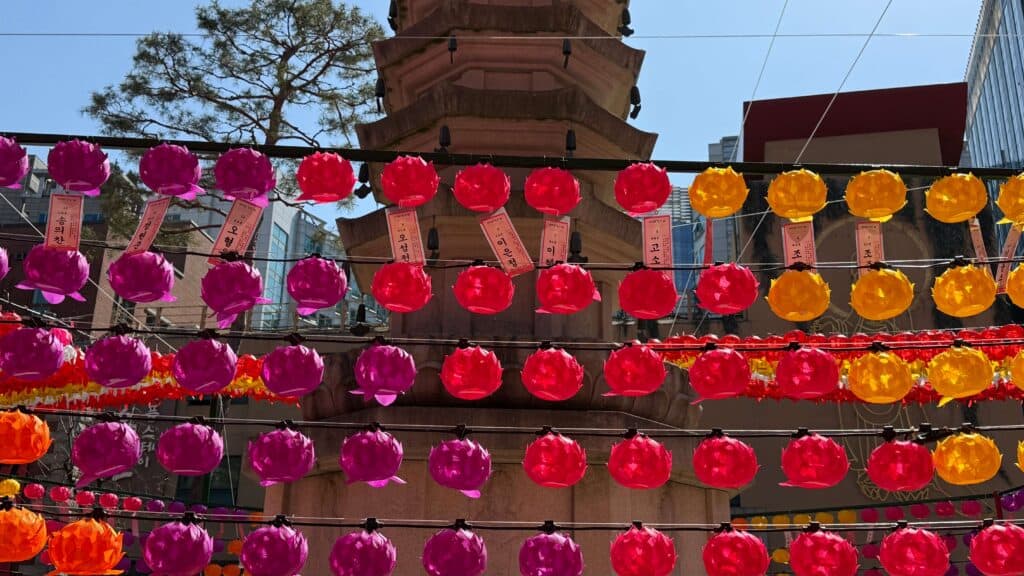
The main hall dates back centuries and is decorated with intricate painted woodwork in vivid golds, reds and blues. If you visit in spring, the temple grounds are draped in thousands of coloured paper lanterns for the Buddha’s Birthday celebrations — one of the most visually extraordinary things I’ve seen anywhere in Asia.
It’s free to enter, open daily and genuinely welcoming to visitors of all backgrounds. Take your time here. Sit on one of the benches under the 500-year-old white pine tree and just breathe for a moment.
What many visitors don’t realise is that you can actually stay here. The Temple Stay programme allows you to spend one or more nights living as a monk does — meditation, early morning bell ceremonies, tea rituals and a level of stillness that’s genuinely hard to find anywhere in a city this size. It’s one of the most memorable things you can do in South Korea and bookings fill up fast, so plan ahead.
Directly across the road from the temple is the Jogyesa Buddhist Information Centre — an excellent and completely free resource with English-speaking staff who can help you book a temple stay, explain the ceremonies and give you a proper introduction to Korean Buddhism before you head inside. Most people walk straight past it, which is a shame because it genuinely adds depth to the visit.
Tip: Visit in the early morning or early evening when the light is softer and the temple is quieter. Dress modestly — covered shoulders and knees are respectful here.
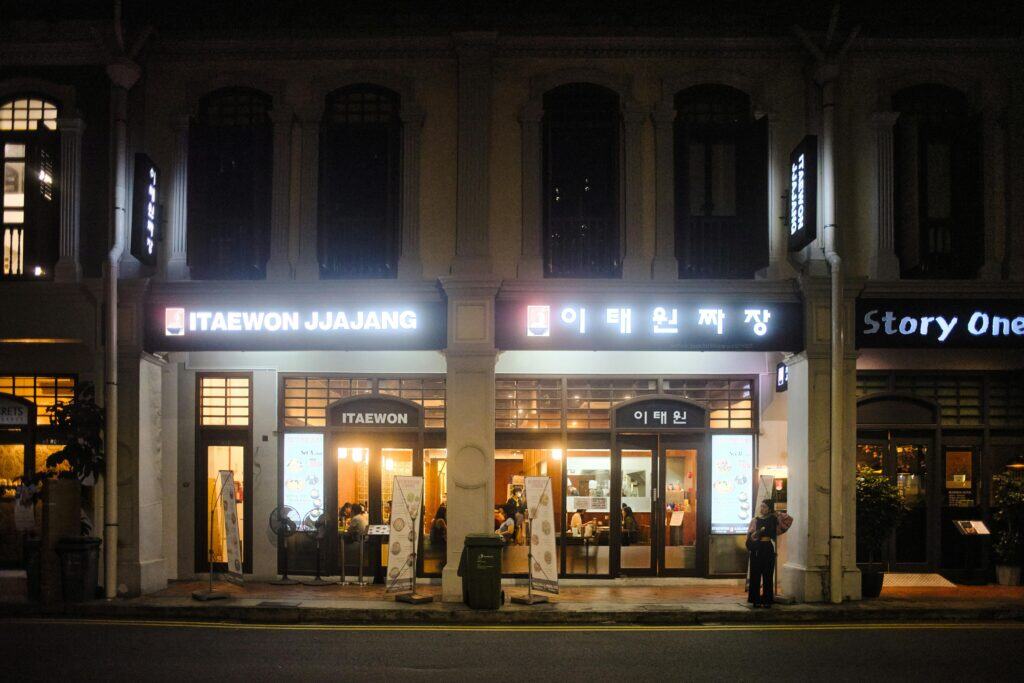
9. Explore Itaewon and Haebangchon — Seoul’s International Quarter
Itaewon has long been Seoul’s most international neighbourhood — historically popular with expats and travellers for its diverse food scene and more relaxed atmosphere. The nearby hillside neighbourhood of Haebangchon (HBC) has a lovely village feel with independent cafés, bars and restaurants run by locals and expats alike.
This is where you go when you want excellent Mexican food, a proper flat white, or just to sit in a café that feels a little less like you’re in a K-drama set.
If you want to try something a little different – try Vatos, it is one of my favourite fusions (Korean/Mexican). Just a short walk from Itaewon, the Leeum Samsung Museum of Art is one of Asia’s finest private collections — traditional Korean ceramics and Buddhist art sit alongside contemporary works by the likes of Damien Hirst and Lee Ufan, all housed in three striking buildings designed by three different world-renowned architects.
Staying in Seoul? Compare hotel options in Itaewon and Gangnam here — location really matters in this city.
10. Day Trip to the DMZ — the Most Sobering Experience You’ll Have
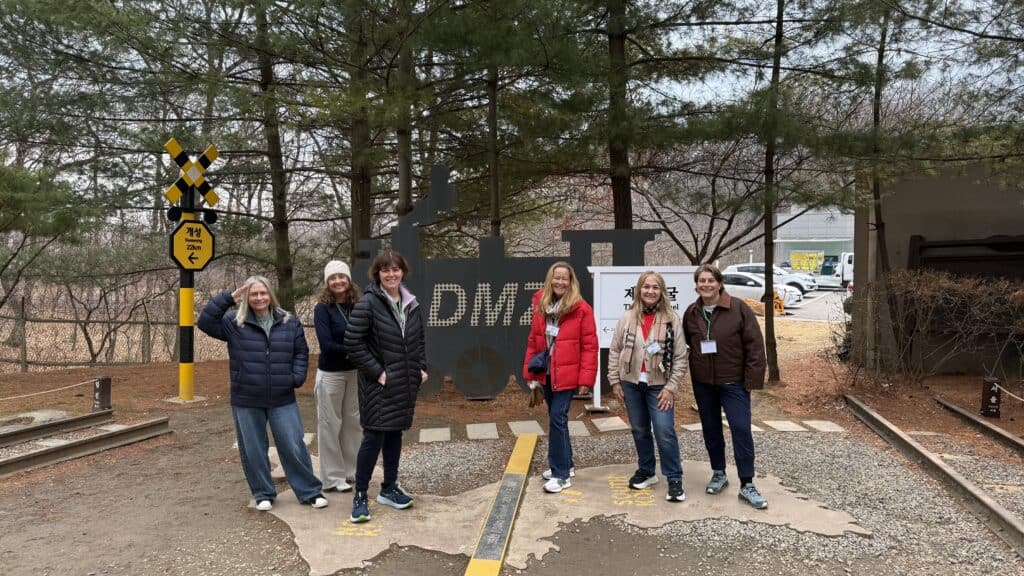
You cannot visit South Korea without acknowledging what makes it South Korea. The Demilitarised Zone — the border with North Korea — sits just an hour north of Seoul and is visited via guided tour only. It’s a genuinely moving and thought-provoking experience, and the Joint Security Area (JSA) tour brings you closer to the border than you’d believe possible.
IIt’s not a light day out. But it is an important one — read my full DMZ day trip guide before you go so you know exactly what to expect.orable part of their trip.
Book your DMZ and JSA tour from Seoul here — tours sell out fast, book in advance.
The Best Neighbourhoods to Know Before You Go
Seoul’s neighbourhoods each have a completely different personality. Here’s a quick guide to help you decide where to spend your time:
- Myeongdong — Shopping, K-beauty, buzzing street food. Best for: daytime retail therapy.
- Bukchon Hanok Village — Traditional Korea, quiet lanes, photography. Best for: early mornings.
- Insadong — Galleries, tea houses, crafts. Best for: a slower, more reflective afternoon.
- Itaewon / HBC — International food, expat community, independent cafés. Best for: a break from full immersion.
- Gangnam — Luxury shopping, sleek restaurants, business district energy. Best for: contrast and curiosity.
- Jongno — History, palaces, traditional markets. Best for: first-time visitors wanting to understand Seoul’s roots.
Not sure which area suits you best? I’ve written a full guide on where to stay in Seoul covering every neighbourhood in detail.
A Few Practical Things Worth Knowing
- Get a T-money card at the airport — it works on metro, buses and even some taxis and convenience stores.
- Download Naver Maps, not Google Maps. Google Maps is noticeably less accurate in Seoul.
- Convenience stores (CU, GS25, 7-Eleven) are genuinely excellent here — hot food, cold drinks, decent coffee. Don’t overlook them.
- Get a local SIM or eSIM before you land. Airalo works well for South Korea and you can activate it before your flight lands.
- Tipping is not expected or customary in South Korea. You’re welcome.
Frequently Asked Questions
How many days do I need in Seoul?
Five to seven days is the sweet spot for a first visit — enough to cover the main neighbourhoods, do a day trip and still leave time for wandering. If you’re combining with other Korean cities like Busan or Gyeongju, add a couple more days.
Is Seoul easy to get around without speaking Korean?
Surprisingly yes. The metro system has full English signage and Google Translate’s camera function handles most menus. Younger Koreans especially speak reasonable English, and the hospitality industry is well used to international visitors.
What is the best time of year to visit Seoul?
Spring (March to May) for cherry blossoms, autumn (September to November) for the colours and crisp air. Summer is hot and humid with a rainy season in July. Winter is cold but photogenic — and Christmas in Seoul is surprisingly festive.
Is Seoul safe for solo female travellers?
Very. Seoul consistently ranks among the safest cities in the world for solo travel. The metro is clean and well-lit at all hours, taxis are reliable and metered, and the general culture is one of respect and order. That said, apply the same common sense you would anywhere.
Where is the best place to buy K-beauty products in Seoul?
Myeongdong for the big brands and the full experience. Olive Young (Korea’s answer to Sephora) is scattered across the city and is excellent for discovering newer local brands. The duty-free shops at Incheon Airport are also genuinely competitive — don’t assume you need to buy everything in the city.
Conclusion & Read More
Seoul is the kind of city that makes you immediately start planning your return trip. It’s efficient enough that you never feel lost, but layered enough that you could visit five times and still find something new. Go for the palaces, stay for the food, and yes — budget an extra kilo in your luggage for the K-beauty haul. You’ve been warned. 🙂
Follow along on Instagram where I share real-time travel updates, behind-the-scenes moments and travel tips and recommendations.
Join the Truly Expat Facebook community — a supportive space for travellers to ask questions, share tips, and connect before trips.
Affiliate Disclosure: This post contains affiliate links. If you book through them, I may earn a small commission at no extra cost to you — this helps me keep creating free, detailed travel guides. I only recommend services and products I genuinely use and trust after years of travel across Asia.
Running this blog takes a lot of coffee (and countless hours exploring every destination!). If you found this helpful and want to support more honest, detailed travel guides and itineraries, you can buy me a coffee. No pressure though – I’m just happy you’re here and hope you have an incredible adventure! 🙂

Pin It For Later